Dr. Chike’s Key Takeaways (2026)
-
Experience-Based Insight: At Hampstead Aesthetics, we have observed that IPL is often more effective than antibiotics for patients with “inflammatory redness” (post-acne marks) because it targets the blood vessels, not just the bacteria.
-
The “Dual-Target” Mechanism: Unlike creams that sit on the surface, 2026-era IPL devices use “Burst-Pulse” technology to simultaneously destroy P. acnes bacteria and shrink overactive oil glands.
-
Not for Everyone: We value transparency. IPL is generally not recommended for darker skin tones (Fitzpatrick IV-VI) due to pigmentation risks. For these patients, we recommend Nd:YAG Laser or Chemical Peels.
What Is IPL Acne Therapy?
Intense Pulsed Light (IPL) is a medical-grade light therapy that destroys acne at its source by targeting the bacteria (P. acnes) and the blood vessels feeding the inflammation.
While lasers use a single beam of light, IPL uses a broad spectrum of light filters. Think of it as a “smart bomb” for your skin—it bypasses the healthy surface layer to detonate only when it hits the pigmented bacteria or red inflammation deep in the pore.
The “Dual-Layer” Action
Blue Light (400-470nm): Reacts with porphyrins (compounds produced by acne bacteria) to create single-oxygen molecules that kill the bacteria instantly.
Red Light (600nm+): Targets the hemoglobin in dilated capillaries, effectively shutting down the redness and “de-gorging” the spot, helping it heal 3x faster than with topical creams alone.
Dr. Chike’s Clinical Pearl: “Patients often ask me why their spots leave red marks for months. This is called Post-Inflammatory Erythema (PIE). In our clinic, we use IPL specifically to ‘mop up’ this redness. It is one of the few treatments that can clear these red marks in weeks rather than months.”
Does It Really Work? The Evidence
Yes, but expectations must be managed. It is not a “one-and-done” miracle cure; it is a progressive therapy.
2026 Safety & Efficacy Profile
Current clinical data indicates that a course of 3-5 sessions can yield an 85% reduction in active lesions.
Active Acne: Highly effective for papules and pustules (red, angry spots).
Comedonal Acne: Less effective for non-inflamed blackheads (Chemical Peels are better here).
Cystic Acne: Moderate effectiveness. While it reduces inflammation, severe cysts often require a combination of IPL and prescription medication.
| Feature | Hampstead Aesthetics (Medical IPL) | High-Street Salon / Home Devices | Antibiotics (Oral) |
|---|---|---|---|
| Technology | 2026 Burst-Pulse (High energy, short duration) | Low-Energy / Single Pulse | N/A |
| Safety | Doctor-Led | Non-Medical Technicians | Systemic side effects possible |
| Bacteria Kill Rate | High (Deep dermal penetration) | Low (Surface level only) | Moderate (Resistance is common) |
| Redness (PIE) Removal | Excellent (Targets blood vessels) | Poor | None |
| Downtime | Minimal (Redness for 2-4 hours) | Variable | None |
*Swipe left on the table to view all columns.

Who Is Suitable for IPL?
Curious whether IPL would help your skin? Arrange a skin assessment at our Hampstead clinic for a doctor-led view.
This is the most critical section for your safety. IPL is light-sensitive, meaning it reacts to pigment.
The Ideal Candidate
Has Fitzpatrick Skin Types I-III (Very Fair to Medium Olive).
Suffers from red, inflamed acne or red scarring.
Is not currently taking Roaccutane (Isotretinoin) – You must wait 6 months after stopping.
Who Should AVOID IPL?
Darker Skin Tones (Fitzpatrick IV-VI): The risk of the laser targeting the melanin in your skin (instead of the acne) is too high, leading to potential burns or hyperpigmentation.
Our Alternative: For our clients with darker skin tones, Dr. Chike advises using chemical peels or microneedling, which are colour-blind and safe.
Recent Tan: If you have tanned in the last 4 weeks (sun or fake tan), you cannot be treated.
In our clinical experience: “We often see patients who have been burned by ‘at-home’ IPL devices because they didn’t realize their recent holiday tan made them ineligible for treatment. At Hampstead Aesthetics, we perform a thorough pigment check before every single session.”
The Treatment Process
Does IPL Hurt?
Most patients describe the sensation as a “warm flick of an elastic band.” It is generally well-tolerated. Our modern 2026 devices utilize a Sapphire Cooling Tip which chills the skin milliseconds before the light pulses, significantly reducing discomfort.
To find out if you are a suitable candidate, book a consultation for IPL treatment at our London clinic.
What to Expect Post-Treatment
Immediate: Mild redness (erythema) and a feeling of warmth, similar to a mild sunburn. This usually subsides within 2-4 hours.
Days 1-3: You may experience a “micro-crusting” or darkening of pigmented spots. This is a good sign—it means the pigment is lifting.
The “Purge”: Occasionally, deep impurities may surface rapidly. Do not pick them; they will clear quickly.
Not sure which treatment is right for you?
Frequently Asked Questions
1. How many sessions will I need? While you may see reduced redness after just one session, a standard medical protocol involves 3 to 6 treatments spaced 2-4 weeks apart. This aligns with the lifecycle of the P. acnes bacteria.
2. Is IPL better than Laser for acne? They serve different purposes. IPL is superior for active inflammatory acne and red marks. Laser (like CO2 or Erbium) is generally better for deep, pitted textural scarring (ice-pick or boxcar scars). Dr. Chike often combines these treatments in a long-term plan.
3. Can I wear makeup after treatment? Yes, but we recommend waiting 12-24 hours if possible to let the pores breathe. If you must, use a mineral-based, non-comedogenic foundation.
4. Will it cure my acne forever? Acne is often hormonal. IPL controls the symptoms excellently and can induce long remission, but maintenance sessions (once every 3-6 months) are often recommended to keep the bacteria count low.
5. Is it safe during pregnancy? No. As a medical-grade clinic, we do not perform energy-based treatments on pregnant or breastfeeding women due to hormonal fluctuations that can increase pigmentation risks.
If you would like a professional opinion on the right approach for you, you can arrange a consultation with Dr Chike Emeagi at Hampstead Aesthetics, 269 West End Lane, West Hampstead.
Not sure which treatment is right for you?
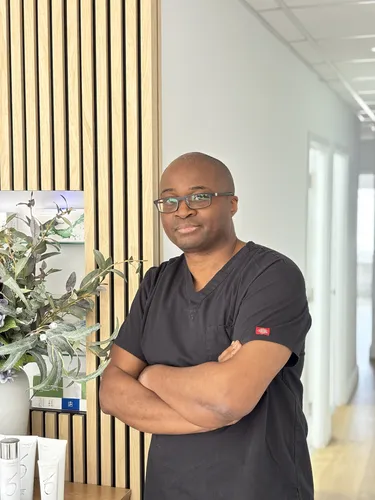
Dr. Chike Emeagi
Dr. Chike is the Medical Director of Hampstead Aesthetics and a recognized Key Opinion Leader (KOL) for Mint PDO Threads and Vivacy (Stylage). He personally designs the clinic's safety protocols to ensure undetectable, natural results.

"Not Sure What You Need?"
REQUEST A CALL BACK
“Your journey to skin perfection starts here. Leave your details, and our expert team will be in touch shortly.”