For most patients, masseter Botox lasts between four and six months. The initial effects on jaw tension and clenching tend to appear within seven to ten days, while visible slimming of the jawline develops more gradually over four to six weeks as the muscle reduces in bulk. Longevity depends on several individual factors, but patients who maintain a consistent treatment schedule often find that results extend beyond six months over time. If you are considering masseter Botox in London, this timeline is a useful starting point before booking a consultation.
Why the timeline varies: what happens inside the muscle
Botulinum toxin works by blocking the release of acetylcholine at the neuromuscular junction. Without this chemical signal, the masseter muscle cannot contract with its usual force. Over the following weeks, reduced contraction leads to a measurable decrease in muscle volume. A study published in Dermatologic Surgery confirmed that masseter muscle thickness decreased by an average of 31 per cent at 12 weeks following botulinum toxin injection.
The reason masseter Botox does not last indefinitely is that the body gradually regenerates new nerve terminals, restoring communication between the nerve and the muscle. This process, called axonal sprouting, is why the effect fades and why maintenance sessions are needed. The rate of regeneration varies between individuals and is influenced by factors including metabolic rate, muscle mass and habitual use patterns such as clenching or chewing.
What also matters is the proportion of Type I versus Type II muscle fibres in the masseter. The masseter contains a high density of Type I slow-twitch fibres, which are resistant to fatigue and recover their function more predictably than Type II fast-twitch fibres. This fibre composition is one reason the masseter requires higher doses of botulinum toxin than smaller facial muscles and why regular treatment is more effective than sporadic sessions.
In my practice at Hampstead Aesthetics, I find that patients who are heavy clenchers often notice the return of tension slightly earlier than those whose primary concern is aesthetic jawline slimming. The muscle is simply working harder in those patients, which accelerates the re-establishment of nerve signalling. I also notice that patients taking GLP-1 medications such as semaglutide sometimes report that facial slimming from masseter Botox appears more pronounced, likely because overall facial volume reduction compounds the effect of muscle reduction.
Clinical timeline: what to expect phase by phase
Phase one: days zero to seven
Most patients describe a subtle softening of jaw tension within the first three to five days. The muscle has not yet changed in size at this stage. What has changed is the force of contraction. Patients who grind their teeth at night often notice improved sleep quality before any visible change. Mild tenderness at the injection sites is normal and typically resolves within 48 hours. There is no downtime.
Phase two: weeks one to four
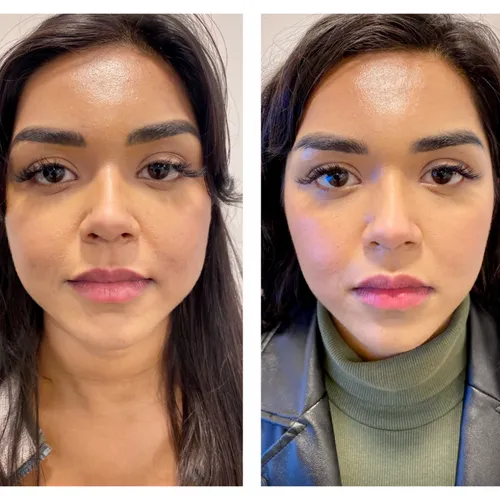
This is the period of most noticeable change. As the muscle contracts less forcefully, it begins to atrophy. By week two, many patients report that their jaw feels lighter. By week three to four, the aesthetic effect becomes visible. The jawline appears narrower and the lower face looks less square.
This is something I see in consultations regularly. Patients return at the four-week mark and describe the result as subtle but clear. They look like themselves. The face simply appears less heavy. For patients whose primary concern is bruxism rather than aesthetics, this is often the point at which headaches and morning jaw soreness reduce noticeably. Partners frequently report a significant decrease in audible grinding at night.
Phase three: weeks four to twelve and beyond
Peak results typically occur between weeks six and eight. The muscle is at its smallest volume and the jawline contour is at its most defined. From this point, the effect is stable for several weeks before a very gradual return of muscle activity begins.
Most patients rebook between month four and month six. Patients on their third or fourth cycle of treatment often find that results last longer, sometimes approaching seven to eight months, because the muscle has been in a reduced state for an extended period and takes longer to rebuild its original mass.
What affects how long your results last
Several factors influence how quickly the effect wears off. These are the ones I discuss most frequently in clinic.
Muscle mass at baseline. Patients with a naturally large or hypertrophic masseter require higher doses initially and may find the effect wears off slightly faster until the muscle has been reduced over two to three treatment cycles.
Habitual clenching and bruxism. Stress-related jaw clenching is extremely common and places constant demand on the masseter. Patients who clench heavily during the day or grind at night tend to notice the return of tension earlier. A night guard can help extend results.
Metabolic rate. Patients with higher metabolic rates, particularly those who exercise intensely, may metabolise botulinum toxin faster. This is not unique to masseter treatment; it applies across all Botox applications. In my clinical experience, patients who train at high intensity more than five times per week sometimes report a slightly shorter duration.
Dosage and technique. The number of units injected and the precision of placement affect both the strength and duration of the result. At Hampstead Aesthetics, I typically use 40 to 60 units across both masseters, adjusted based on the patient’s muscle bulk and treatment history. Underdosing is the most common reason for results feeling short-lived.
Treatment consistency. Patients who maintain a regular schedule, particularly in the first 12 to 18 months, consistently achieve longer-lasting results. The muscle adapts to reduced activity and takes progressively longer to return to its pre-treatment size.
Normal responses versus signs to contact the clinic
Normal in the first two weeks
Mild tenderness or a feeling of tightness around the jaw is common in the first 48 hours. A temporary sensation of weakness when chewing firm foods, such as steak or crusty bread, is expected and resolves as you adapt within one to two weeks. Slight asymmetry in the early days is not unusual, as one side may respond marginally faster than the other. This typically evens out by week three. Some patients notice a subtle change in the way their smile feels in the first week. This is transient and relates to the proximity of the masseter to the risorius and zygomaticus muscles. It resolves without intervention in the vast majority of cases.
Contact the clinic if you experience
Difficulty swallowing or a persistent feeling that food is catching in the throat. A significant change in your smile that has not resolved by week three. Pain that worsens rather than improves after the first 48 hours. Any unexpected swelling, redness or warmth at the injection sites beyond 72 hours. These responses are uncommon but should be assessed promptly. Call Hampstead Aesthetics directly or email the clinic and a member of the clinical team will respond within 24 hours.
Frequently asked questions
How long does masseter Botox last the first time?
Most first-time patients experience results lasting three to four months. The muscle has not yet been conditioned by repeated treatment, so it tends to recover its size and activity more quickly. By the second or third session, results typically extend to five or six months as the muscle has spent a sustained period in a reduced state.
Does masseter Botox last longer with repeated treatments?
Yes. Patients who maintain a consistent treatment schedule almost always report longer intervals between sessions. After three to four cycles, the masseter muscle becomes smaller at baseline and takes longer to rebuild. I see patients in my practice who were initially rebooking every four months and now comfortably go six to seven months between treatments.
How do I know when masseter Botox is wearing off?
The first sign is usually a return of jaw tension or a feeling of tightness when you wake. Some patients notice they are clenching again during periods of concentration or stress. Aesthetically, a subtle widening of the jawline may become apparent, though this is usually more gradual than the functional return of tension.
Can I make masseter Botox last longer?
There are practical steps that help. Reducing habitual clenching by wearing a night guard if you grind your teeth. Managing stress, since cortisol-driven clenching is one of the main accelerators. Avoiding excessively chewy foods that keep the masseter working hard. Rebooking before the effect wears off completely, rather than waiting for full muscle recovery, is the single most effective strategy for extending longevity.
Is it safe to have masseter Botox repeatedly?
Botulinum toxin has been used in clinical practice for over three decades. Long-term repeated use in the masseter is well established and considered safe when administered by a trained practitioner. There are no cumulative toxicity concerns at standard cosmetic doses. A small number of patients develop reduced responsiveness over many years, though this is uncommon with masseter treatment specifically.
What happens if I stop having masseter Botox?
The muscle gradually returns to its pre-treatment size and activity level. This process takes several months, and the rate of return depends on how long you have been having treatment. Patients who have had only one or two sessions may notice full return within three to four months. Those who have been on a regular schedule for over a year often find the muscle stays partially reduced for six months or longer after stopping.
How many units of Botox are used for the masseter?
At Hampstead Aesthetics, I typically administer 40 to 60 units in total, split evenly between the two masseters. Patients with a particularly large or hypertrophic muscle may require up to 30 units per side. The dose is adjusted at each visit based on how the muscle has responded and the patient’s goals.
Is masseter Botox painful?
Most patients describe it as a brief, mild pressure. The masseter is a thick muscle and the injections are relatively shallow. A topical numbing cream can be applied beforehand if preferred, though the majority of patients find this unnecessary. The procedure takes around ten minutes.
Can masseter Botox change my face shape permanently?
Botox itself is not permanent. The effect is always reversible. However, patients who maintain treatment consistently over two to three years sometimes find that the muscle remains smaller even after discontinuing, because prolonged disuse can lead to lasting atrophy. This is not a predictable outcome and varies between individuals.
Does masseter Botox affect chewing?
In the first one to two weeks, some patients notice mild fatigue when chewing very firm foods. This resolves as the brain adapts to the reduced muscle force. Normal eating, including chewing regular foods, is unaffected. The goal is to reduce excessive contraction, not to impair function.
Arrange a consultation at Hampstead Aesthetics
If you are considering masseter Botox or would like to understand whether your jawline concerns would respond to treatment, a consultation is the most practical starting point. There is no obligation and no assumption about treatment.
Arrange a consultation at Hampstead Aesthetics
Related reading
- How Long Does Masseter Botox Take to Work?
- Why Your Face Looks Wider: The Stress Jaw Explained
- How Much Does Masseter Botox Cost?
- The Art of Jawline Sculpting: A Comprehensive Guide
This article is for informational purposes only and does not constitute medical advice. Individual results vary. A clinical assessment is required before any aesthetic treatment.
About the author
Dr Chike Emeagi — MBBS, MRCGP, MRCS, MSc, MBA. Over 12 years in Aesthetic Medicine. Hampstead Aesthetics, West Hampstead, London. GMC registration number: 4418489.
Dr Chike Emeagi is an aesthetic practitioner based in Hampstead, London, with over a decade of clinical experience in facial contouring and jawline treatments. He has a particular interest in masseter Botox for both functional relief of bruxism and TMJ discomfort and aesthetic jawline slimming, and sees a high volume of patients seeking jawline refinement at Hampstead Aesthetics.