Sofwave and Profhilo: the tighten-and-hydrate combination

Dr Chiké Emeagi, Medical Director of Hampstead Aesthetics

Written by Dr Chiké Emeagi — MBBS, MRCGP, MRCS, MSc, MBA · GMC 4418489
Last updated 5 September 2026 · Clinically reviewed · Hampstead Aesthetics, West Hampstead, London

The short answer

Sofwave and Profhilo are the most useful combination protocol I run at Hampstead Aesthetics. Sofwave tightens the dermis through new collagen at 1.5 mm depth. Profhilo hydrates and biostimulates the same dermal layer through pure, high-molecular-weight hyaluronic acid. The two work in the same tissue plane on different but complementary axes: Sofwave on collagen, Profhilo on hyaluronic acid and elastin. Combined, the result is firmer, smoother, more hydrated skin than either treatment produces alone, and the cost of the combined protocol is meaningfully less than two stand-alone aesthetic plans.

Why these two complement rather than overlap

Skin quality is determined by three structural elements: collagen, elastin, and hyaluronic acid in the dermal mesh. Collagen gives skin its firmness. Elastin gives it the bounce-back when pressed. Hyaluronic acid gives it volume, hydration, and the visible plumpness associated with healthy young skin. With age, all three decline. The clinical question is which element you replace, with what tool, and in what sequence.

Sofwave addresses collagen directly. The pivotal trial (Wang JV et al., Dermatologic Surgery, 2021) reported that 88 per cent of subjects were rated as improved for fine lines and wrinkles at 12 weeks, driven by new type 1 collagen at the 1.5 mm dermal target. Profhilo addresses hyaluronic acid directly. Stellavato et al. (Cells, Tissues, Organs 2017) demonstrated that high-molecular-weight hyaluronic acid such as that in Profhilo upregulates fibroblast activity and elastin synthesis as well as binding water in the dermis.

In my practice at Hampstead Aesthetics, the patients who most benefit from the combined protocol are those whose skin needs both tightening and hydration: typically late thirties to fifties, with thinning skin texture, mild laxity, and the kind of dryness that no moisturiser quite fixes. Sofwave alone addresses the laxity. Profhilo alone addresses the hydration. Together they address the whole skin-quality picture.

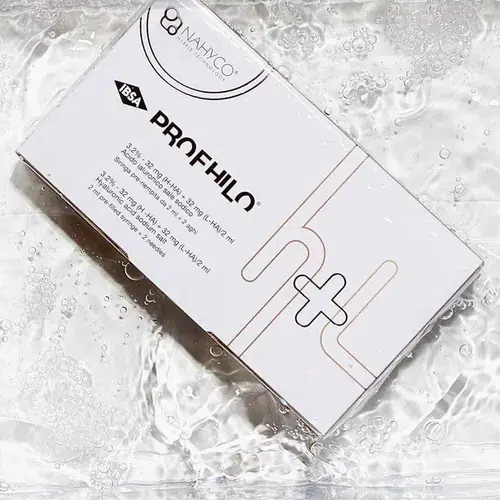
Profhilo Hampstead Aesthetics

The Sofwave layer: tightening at 1.5 mm

Sofwave delivers focused ultrasound at 1.5 mm depth using SUPERB parallel-beam technology. The thermal injury triggers fibroblasts to lay down new type 1 collagen, remodelling the dermal mesh over 12 weeks. The result is firmer skin texture, softening of fine lines, and slight definition along the jawline edge in patients with early jowls. Sofwave does not change the volume of the face. It changes the firmness and quality of the skin overlying that volume.

The Profhilo layer: hydration and biostimulation

Profhilo is an injectable formulation of high- and low-molecular-weight hyaluronic acid that spreads through the dermis after injection at five precise points on each side of the face (the ‘BAP technique’). Unlike traditional dermal fillers, Profhilo does not occupy a fixed shape. It diffuses through the dermal tissue, hydrating the skin and biostimulating fibroblasts to produce more collagen and elastin themselves. The standard course is two sessions four weeks apart, with results lasting six to nine months.

The visible effect is different from filler. Profhilo does not add structural volume; it adds skin-quality. Patients describe the result as looking glowy, more rested, with skin that feels smoother to the touch. It is sometimes called an ‘injectable moisturiser’, though that undersells the biological effect on collagen and elastin synthesis.

Sofwave and Polynucleotides, or Sofwave and Profhilo?

Profhilo isn’t the only biostimulator I pair with Sofwave. Polynucleotides work on a related but different mechanism: salmon or trout-derived DNA fragments that trigger tissue repair, rather than the pure hyaluronic-acid hydration Profhilo provides.

For most patients after Sofwave, wanting hydration and a visible glow, Profhilo is the better fit. For patients with thinner, more fragile skin, particularly under the eyes or on a compromised neck, Polynucleotides sometimes give a more resilient result. We set out the difference in full in Polynucleotides vs Profhilo, and decide which one fits your skin at consultation rather than defaulting to either.

The combined protocol: timing, sequence, and sessions

The protocol I use at Hampstead Aesthetics runs as follows. At week 0, deliver Sofwave (single session, full face or full face and neck). At week 4, deliver Profhilo session 1. At week 8, deliver Profhilo session 2. The Sofwave collagen-remodelling window from week 0 to week 12 overlaps with the Profhilo biostimulation window, producing a layered effect that neither treatment achieves alone.

The order matters. Sofwave first establishes the dermal collagen base; Profhilo then layers hydration and additional biostimulation over the firming foundation. Doing Profhilo first and Sofwave second works clinically but produces less synergy. Patients I follow up with at 12 weeks consistently rate the Sofwave-first protocol higher than the reverse on subjective skin-quality outcomes.

Who benefits most from the combination

Five patient profiles where the Sofwave-plus-Profhilo combination produces a fuller result than either alone. The first is patients in their late thirties to fifties with moderate skin laxity and noticeable skin dryness or dullness. The second is patients on GLP-1 medications such as Mounjaro or Ozempic who present with both volume loss and skin laxity. We cover this pattern in more depth in why your face changes shape after weight loss, but in short, the combination addresses texture and quality without further heating fat compartments that are already reduced. The third is patients with crepey neck where tightening alone leaves the dermal mesh under-hydrated. The fourth is patients with photo-damaged skin from earlier life sun exposure who need both collagen reinforcement and hydration restoration. The fifth is patients seeking a wedding-ready or event-ready skin glow, planned at week 12 from the start of the protocol.

before and after photo of lower face and neck following sofwave london treatment

Pricing for the combined protocol

At Hampstead Aesthetics, the Sofwave plus Profhilo combination is priced as a package that costs less than booking the two treatments separately. As a guide for 2026, full face Sofwave (£1,850) plus a course of two Profhilo sessions (£700 to £900 in most London clinics) totals £2,550 to £2,750 if booked separately. The combined package is from £2,250 VAT-inclusive, with no compromise on the standard of either treatment. The package includes the Sofwave session, both Profhilo sessions, the consultation, the aftercare plan, and the six-to-eight-week review with Dr Chike. Final pricing is confirmed at consultation. 

Realistic results from the combination

Patients I follow up with at week 12 of the combined protocol describe a particular kind of result. Skin feels firmer and tighter from the Sofwave layer. Skin looks more hydrated, glowy, and visibly fuller from the Profhilo layer. Fine lines soften across both treatments. The jawline edge looks more defined in patients who had early jowls at baseline. The neck and décolletage, when included in the protocol, see meaningful improvement in crepey texture and dryness that neither treatment alone usually addresses. The combined effect is greater than the sum of the parts because the two treatments work on adjacent biology in the same dermal layer.

What the combination will not do is replace volume loss. Patients who present with volume deflation in the cheeks or temples need dermal filler in addition to (or instead of) the combination. We will tell you that honestly at consultation rather than book a Sofwave plus Profhilo plan that does not address your actual concern.

You can see the Sofwave side of this pattern on its own, before any Profhilo is layered on top, in our guide to who makes a good Sofwave candidate.

Caring for your skin between sessions

The eight weeks between your Sofwave session and your second Profhilo appointment aren’t a waiting period. They’re part of the treatment.

Sun protection matters most. Apply SPF 50 every morning, whatever the weather. UV exposure works against the same collagen fibres Sofwave has just triggered your skin to build, and undoes some of the result you’re paying for.

Keep the routine simple for the first two weeks after Sofwave. A gentle cleanser, a plain moisturiser, and SPF are enough. Save retinoids and acids until after your first Profhilo session, then bring them back gradually. Both can irritate skin that’s mid-remodel.

A hyaluronic acid serum, applied morning and evening, supports what Profhilo is doing at the dermal level, though it works at the surface and won’t substitute for the injectable course itself.


Patients on a structured skincare programme (we run many patients through ZO Skin Health alongside this exact protocol) tend to see a more even, longer-lasting result at the twelve-week mark than patients who do nothing between appointments. We review your home routine at each Profhilo session and adjust it if needed.

Frequently asked questions

Can Sofwave and Profhilo be done on the same day?

It is possible but not preferred. Doing both on the same day means the Sofwave heat acts on freshly placed Profhilo, which can affect how the hyaluronic acid distributes through the dermal mesh. Spacing them four weeks apart, with Sofwave first and Profhilo at week 4 and week 8, produces a better synergistic result. The four-week interval also lets the Sofwave aftercare window settle before injectable treatment begins.

Should Sofwave or Profhilo come first?

Sofwave first. The Sofwave collagen-remodelling window establishes a firmer dermal base, and the Profhilo then layers hydration and additional biostimulation over that foundation. Doing Profhilo first and Sofwave second works clinically but produces less synergy. Patients I follow up with at 12 weeks consistently rate the Sofwave-first protocol higher on subjective skin-quality outcomes.

How much does the Sofwave plus Profhilo combination cost in London?

Booked separately, full face Sofwave (£1,850) plus a course of two Profhilo sessions (£700 to £900 in most London clinics) totals £2,550 to £2,750. The combined package at Hampstead Aesthetics starts from £2,250 VAT-inclusive and includes the consultation, both Profhilo sessions, the Sofwave session, aftercare, and the six-to-eight-week review with Dr Chike. Final pricing is confirmed at consultation.

How long do the combined results last?

Sofwave collagen results last 12 to 24 months. Profhilo results last six to nine months and are typically refreshed annually. Here’s how the timeline runs from the start of your protocol:

TimepointWhat happens
Week 0Sofwave session (full face, or full face and neck)
Week 4Profhilo session 1
Week 8Profhilo session 2
Week 12Combined result peaks
Month 6-9Profhilo effect fades; single top-up session recommended
Month 12-18Sofwave effect fades; Sofwave top-up recommended

Patients who stay on this maintenance schedule report consistent skin quality year-round, rather than the natural decline they’d otherwise see.

Is the combination painful?

Mildly uncomfortable. Sofwave is a warming sensation with brief moments of heat, no anaesthetic needed. Profhilo involves five small injections per side, which most patients describe as a brief pinch. Numbing cream can be applied before Profhilo if requested. Neither treatment produces sustained pain after the appointment. The combined protocol is comfortable enough for most patients to return to work the same afternoon.

Why Sofwave rather than HIFU for the tightening layer?

HIFU targets deeper tissue, down to the SMAS layer in some protocols, and can heat fat compartments along the way. For most patients that’s not an issue, but for anyone already lean, recently through weight loss, or with a thinner face, that extra heat can remove fat you want to keep. Sofwave works at 1.5mm, inside the dermis only, so it tightens skin without touching the fat underneath. That’s the main reason I default to Sofwave rather than HIFU for this combination. See Sofwave vs HIFU if you’re weighing the two devices directly.

Who should not have the Sofwave plus Profhilo combination?

The combination is not used in pregnancy or while breastfeeding. It is not used over pacemakers or metal implants in the treatment area. Active skin infection, severe rosacea flare, recent isotretinoin use within the last six months, or active autoimmune skin disease are reasons to defer. Patients with a known hyaluronic-acid hypersensitivity should not have Profhilo, but Sofwave alone remains an option. Each contraindication is checked at consultation.

Can I add botox or fillers to the combination?

Yes, with appropriate spacing. Botox can be added four weeks after either Sofwave or Profhilo. Dermal fillers for volume restoration can be added four weeks after the Profhilo course completes. The full plan typically runs across three or four appointments over two to three months for a comprehensive face plan. We map the sequence at consultation rather than doing everything at once.

Is the combination suitable for darker skin tones?

Yes. Both Sofwave (ultrasound) and Profhilo (hyaluronic acid) are safe across all Fitzpatrick skin types I to VI. Sofwave does not target melanin and carries no pigmentation risk. Profhilo is hyaluronic-acid based and has been used safely across all skin types since UK introduction in 2015. The combination is particularly useful for African, Caribbean, South Asian, East Asian, and Middle Eastern skin tones, which can be poorly served by older laser-based skin-quality treatments.

Arrange a skin assessment

If you would like to know whether the Sofwave plus Profhilo combination fits your skin and your goals, arrange a skin assessment at Hampstead Aesthetics. We deliver both treatments in-house and price the combination as a package rather than two separate appointments.

Related reading

Sources

  • Wang JV, Ferzli G, Jeon H, Geronemus RG, Kauvar A. Dermatologic Surgery 2021;47(12):1585–1589 — pivotal clinical trial of the Sofwave SUPERB parallel beam ultrasound technology.
  • US FDA 510(k) Premarket Notification K250146 — Sofwave regulatory clearance.
Dr Chiké Emeagi
About the author
Dr Chiké Emeagi, MBBS, MRCGP, MRCS, MSc, MBA, is the Medical Director of Hampstead Aesthetics in West Hampstead, London. He is a GMC-registered doctor (no. 4418489 — verifiable on the GMC register) and personally writes and clinically reviews every treatment guide published on this site.
Arrange a skin assessment · About the clinic

Disclaimer

This article is for informational purposes only and does not constitute medical advice. Individual results vary. A clinical assessment is required before any aesthetic treatment.

Picture of Dr Chike Emeagi

Dr Chike Emeagi

About the Author:
MBBS, MRCGP, MRCS, MSc, MBA.
Over 12 years in Aesthetic Medicine.

Dr Chike Emeagi is an aesthetic practitioner based in West Hampstead, London, with over a decade of clinical experience in dermal biostimulation, skin-quality treatments, and combination protocols. He runs the Sofwave plus Profhilo combination as a packaged plan at Hampstead Aesthetics for patients whose skin needs both tightening and hydration.

Dr Chiké Emeagi
MEDICAL REVIEWER
Dr Chiké Emeagi
Medical Director · Trainer · MBBS, MRCS, MRCGP, MSc, MBA · GMC 4418489

Dr Chiké Emeagi is the Medical Director of Hampstead Aesthetics in West Hampstead. He has been an International Trainer for Mint PDO Threads since 2019 and was a clinical trainer for Vivacy (Stylage) from 2019 to 2025. He reviews every treatment guide on this site.

Read full bio →

Book Your Treatment

Ready to begin? Select your treatment and confirm your appointment online in just a few clicks.

Book Your Consultation

Unsure where to start? Schedule a personalised consultation with Dr. Chiké or a member of the team to explore your options
Hampstead Aesthetics Clinic Reception