You catch your reflection in a video call last Tuesday and something doesn’t sit right. The angle of your jaw looks fuller than you remember. Not heavier—just wider, as if someone had gently pushed your cheeks outward from the inside. You turn your head left, right, and the impression lingers. By Friday, you’ve taken three more selfies from different lighting.
The change is subtle enough that you’re not certain it’s real, but consistent enough that it’s bothering you. You haven’t gained weight. Your diet is the same. Yet your face appears broader across the lower third, and when you run your fingers along your jawline, you can feel a new density there—almost a ridge of muscle beneath the skin.
This is what I see regularly in clinic. Patients arrive with this exact concern, and nine times out of ten, the answer lies not in diet or ageing but in a phenomenon called masseter hypertrophy: the enlargement of the chewing muscle through stress, grinding, or clenching. Before you assume you need a facelift or filler reversal, it’s worth understanding the biology behind it. And it’s worth knowing that solutions exist—starting with your own habits, and extending to clinical options like masseter Botox if home methods plateau.

The biology: four mechanisms
Mechanism 1: Masseter hypertrophy (muscle growth from overuse)
The masseter is the strongest muscle in your body relative to its size. It runs from your cheekbone to your lower jaw, and its job is to clench and chew. Under normal conditions, it remains modest and proportional. But place it under sustained or repetitive load—clenching during stress, grinding at night, or holding tension throughout the day—and it responds like any muscle does: it grows.
This is not weakness or pathology. It’s adaptation. I see it in patients who clench unconsciously, in night-time grinders (bruxers), and increasingly in people under chronic psychological stress. The muscle thickens. Its fibres become denser. The overall volume increases, and because the masseter sits on the outer surface of your jaw, this growth pushes outward visibly, widening the lower face. It’s the same mechanism that builds biceps at the gym, except it’s happening in your jaw whilst you sleep or sit at your desk.
If jaw clenching is widening your lower face, masseter Botox in London can slim the jawline over 6 to 8 weeks. Arrange a consultation for an assessment.
Mechanism 2: Cortisol-driven chronic tension (stress to sustained contraction)
Stress doesn’t just make you feel anxious. It floods your system with cortisol, your primary stress hormone, which primes your muscles for threat. Evolutionarily, this is useful—your jaw clenches as part of your fight-or-flight response. But in modern life, the threat often doesn’t resolve. The email doesn’t get answered. The deadline doesn’t pass. The tension persists.
I follow patients through high-stress periods—exam season, work deadlines, relationship turbulence—and the pattern is consistent: cortisol elevation correlates with increased masseter tension and, over weeks, with noticeable widening. The muscle doesn’t relax fully, so it exists in a state of low-grade contraction. Over time, this sustained activation triggers the same growth pathway as active clenching. Stress, in other words, is a slow but steady masseter trainer.
Mechanism 3: Temporomandibular joint adaptation (TMJ remodelling)
Your jaw is a joint—the temporomandibular joint (TMJ)—and like all joints, it remodels based on the loads placed on it. Chronic clenching or grinding increases compressive force across this joint. In response, the joint capsule tightens, the surrounding muscles compensate and strengthen, and the overall architecture of your jaw shifts slightly forward and outward.
This is not rapid, but it is measurable. Over months or years, patients with severe bruxism or clenching habits can develop a noticeably broader, more squared-off jawline. The bone itself doesn’t change dramatically, but the soft tissue architecture—muscle, connective tissue, the way everything sits—repositions to distribute load more efficiently. The result is a face that appears wider at the jaw.
Mechanism 4: Periosteal bone thickening (bone responds to mechanical load)
Bone is not static. It remodels in response to the forces placed upon it. The periosteum—the membrane covering the bone—contains cells that respond to mechanical stimulus by laying down new bone. Chronic jaw clenching or grinding places enormous force through the masseter attachment points on the mandible (lower jaw).
Over extended periods—months to years of consistent tension—this can result in subtle bone thickening at the masseter insertion, further contributing to jawline widening. This is more common in severe, long-standing cases and in people with genetic predisposition to denser bone, but it’s a real mechanism. Once bone remodelling occurs, relaxation alone cannot reverse it.
Together, these four mechanisms explain why a face can appear wider: muscle growth, sustained neural contraction, joint repositioning, and bone adaptation all work in concert to gradually broaden the lower face.
Why it varies: three accelerating factors
Nocturnal bruxism severity
Not all teeth-grinders are equal. A 2019 study in the Journal of Oral Rehabilitation found that patients with nocturnal bruxism had masseter muscle volume up to 30 per cent greater than non-bruxers, with corresponding changes to facial width measurable on CT imaging. The force applied during sleep grinding can exceed voluntary clenching by several times.
In my practice, I ask patients about sleep habits, morning jaw soreness, and tooth wear patterns. Those who grind heavily—grinding through the night multiple times per week—develop masseter hypertrophy faster and more noticeably than light grinders. Severity matters.
Caffeine and stimulant intake
Caffeine is a central nervous system stimulant. It doesn’t just keep you awake; it raises baseline muscle tension. People who consume large amounts of caffeine—particularly if they’re also stressed—tend to maintain higher levels of jaw tension throughout the day. Combine this with evening coffee or energy drinks, and you’re priming your nervous system for nighttime clenching.
I often find that patients who cut caffeine after midday report reduced morning jaw soreness within two to three weeks. The effect is measurable because caffeine’s influence on muscle tension is dose-dependent and reversible.
High-intensity exercise with jaw clenching
This is something I observe regularly that doesn’t appear in most clinical literature: patients who perform high-intensity resistance training or CrossFit often clench their jaws during heavy lifts. Holding a heavy deadlift, pushing hard through a sprint, or straining during a set, they unconsciously brace their jaw. Over weeks, this repeated load-bearing under exertion trains the masseter the same way it trains the legs or back.
I’ve seen faster masseter growth in gym-focused patients than in sedentary ones with similar stress levels—suggesting that the combination of stress-driven clenching plus intentional jaw bracing during exercise accelerates hypertrophy. This factor is reversible with modified lifting habits, but it’s worth noting.
Soft conversion moment
If any of this sounds familiar—the widening you’ve noticed, the morning soreness, the sense that your jaw feels tighter under stress—a skin assessment is the right starting point. There is no obligation and no assumption about treatment.
Home methods: four approaches
Method 1: Magnesium glycinate supplementation
Magnesium is a natural muscle relaxant. It modulates calcium channels in muscle cells, reducing excitability and promoting relaxation. The glycinate form is absorbed well and doesn’t cause the laxative effects of other magnesium salts. For jaw tension and clenching, a dose of 400 milligrams taken one hour before bed is typical.
The protocol I recommend to patients is a 12-week course. Magnesium takes time to build up in the system; you won’t notice relaxation after one dose. Expect subtle changes—slightly less morning soreness, perhaps a bit less tension during stressful days—around week three to four. Keep a simple log: jaw soreness on a scale of one to ten each morning. By week twelve, most people report a two- to three-point reduction if their baseline tension is stress-related.
Method 2: Jaw relaxation technique and tongue posture
Your tongue position influences jaw tension. If your tongue presses against your teeth or sits in the floor of your mouth, you’re likely holding tension. A neutral position—tongue resting on the roof of your mouth (the hard palate, just behind your front teeth) with light contact, not pressing—reduces jaw tension. This is often called “mewing” position, though the clinical term is neutral tongue posture.
Combined with this, a simple relaxation technique: place your fingertips on your masseter (the thick muscle you can feel clenching when you clench your teeth) and deliberately relax it for 30 seconds. Do this twice daily—morning and evening. Paired with correct tongue posture throughout the day, this simple practice interrupts the habitual clenching cycle. You’re retraining your nervous system to recognise and release tension.
Method 3: Caffeine reduction protocol
If you’re drinking coffee or energy drinks through mid-afternoon, they’re still active in your system during the evening and night. Caffeine has a half-life of three to five hours, meaning that an afternoon coffee is still 25–50 per cent active by bedtime. Over eight weeks, try shifting your last caffeine intake to no later than midday—or earlier if you’re sensitive.
Week one to two: notice your baseline (write down roughly when you drink caffeine now). Week three to four: shift to noon cutoff. Week five to eight: maintain and observe changes in jaw tension, morning soreness, or sleep quality. Most people notice reduced nighttime grinding and daytime tension within this window. This is a safe, reversible change with no side effects beyond initial caffeine withdrawal (usually a few days of mild headache).
Method 4: Stress-responsive breathing (4-7-8 technique)
The 4-7-8 breathing technique activates your parasympathetic nervous system, essentially signalling safety to your body. The method is simple: inhale for four counts, hold for seven counts, exhale for eight counts. The long exhale is key—it triggers the vagal brake, which relaxes your muscles.
Practise this twice daily: once in the morning and once before bed. Just four to five repetitions per session, so this takes three minutes total. Over 12 weeks, this trains your nervous system to shift out of the stressed, clenching state more easily. Paired with magnesium, tongue posture, and caffeine reduction, it forms a complete home protocol addressing the neurological, nutritional, and behavioural drivers of jaw tension.
The pivot
If you’ve tried these methods and noticed genuine improvement, that’s excellent—you’ve likely caught the tension early, before significant hypertrophy has developed. Home approaches work well for prevention and for managing mild, recent-onset tension.
But here’s the reality: once the masseter muscle has grown visibly, relaxation alone cannot reverse it. A muscle that has hypertrophied through months of use won’t simply shrink because you’ve relaxed for a few weeks. The neural pathways are established. The muscle fibres are there.
At this point, you have a clinical option that directly addresses the cause: masseter Botox. And whilst this blog has largely focused on home methods, understanding why home methods plateau—and why a clinical intervention makes sense—is essential to informed decision-making. You deserve to know what’s actually possible.
Clinical solution: masseter reduction with Botox
The term “jaw Botox” is sometimes used loosely, and it’s often confused with night guards (which simply prevent grinding but don’t address the underlying hypertrophy). Here’s the distinction: a night guard is a protective device. Masseter Botox is a treatment.
For patients whose widening is driven by clenching rather than structural change, masseter Botox for jaw clenching targets the muscle directly rather than just protecting the teeth.
When injected into the masseter muscle, Botulinum toxin blocks the release of acetylcholine at the neuromuscular junction. This prevents the muscle from contracting. Without contraction, the muscle cannot perform its function—and without the constant work stimulus, it begins to atrophy (shrink). Over eight to 12 weeks, the masseter gradually reduces in size.
This is not permanent. The body slowly regenerates new neuromuscular junctions, and the effect wears off after three to four months. But during those months, two things happen: the muscle shrinks, and your jaw habits often improve (you become more conscious of clenching). Many patients find that by the time the effect begins to fade, their behavioural habits—bolstered by the home methods above—have shifted enough that they require less frequent treatment.
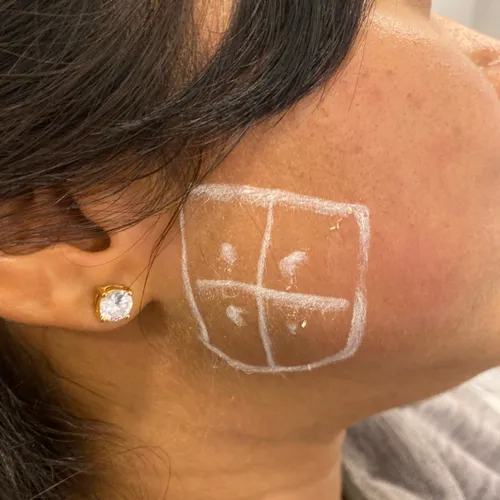
My protocol is to inject the bulk of the masseter, targeting the portion most responsible for visual widening. The dose is calibrated to achieve reduction without creating an unnaturally thin jaw or impairing your ability to chew normally. You’ll still be able to eat, speak, and function completely. What you’ll lose is the unwanted widening and, often, the discomfort of chronic tension.
Outcomes are realistic. Patients report a narrower, more defined jawline within two to three weeks, with maximum reduction by week eight to 12. A single treatment lasts approximately three to four months. Some patients need ongoing treatments; others find that the combination of Botox plus home methods (magnesium, tongue posture, caffeine reduction) allows them to space out treatments or stop entirely.
Before you pursue this, a skin assessment is the right first step. We can examine your face, discuss your specific concerns, confirm whether masseter hypertrophy is the actual cause of widening, and explore whether home methods alone might be sufficient or whether a clinical intervention suits your goals.
Key takeaways
– A wider-looking face is often caused by masseter hypertrophy—enlargement of the jaw muscle through clenching, grinding, or stress—rather than weight gain or structural changes.
– Four biological mechanisms drive this: muscle growth from overuse, cortisol-driven chronic tension, TMJ remodelling, and bone thickening at muscle attachment points.
– Home methods—magnesium supplementation, neutral tongue posture, caffeine reduction, and parasympathetic breathing—can prevent progression and manage mild tension if applied consistently for 12 weeks.
– Established hypertrophy cannot be reversed by relaxation alone; the muscle will not shrink without a clinical intervention.
– Masseter Botox works by blocking neuromuscular contraction, allowing the muscle to atrophy over eight to 12 weeks, with results lasting three to four months.
Frequently asked questions
Can stress alone cause my face to look wider?
Yes. Stress elevates cortisol, which primes your muscles for threat. If you respond by clenching your jaw—which most people do unconsciously—that sustained tension activates the masseter over time. Combined with nocturnal grinding, which many people experience during stressful periods, this can produce noticeable widening within weeks. The effect is dose-dependent: high stress plus poor stress management plus nocturnal bruxism equals faster change.
How quickly can I expect changes from home methods like magnesium or breathing exercises?
Magnesium typically produces subtle changes around week three to four of consistent use, with noticeable reduction in morning soreness by week six to eight. Breathing exercises and tongue posture work faster—you may notice reduced daytime tension within a week—but the overall retraining of your nervous system takes 12 weeks for genuine habit change. None of these reverse existing hypertrophy; they prevent progression and manage tension.
Is my wider-looking face definitely from jaw clenching, or could it be something else?
It could be other causes—actual weight gain, age-related changes, filler asymmetry, underlying bone structure—but clenching-related widening has a specific character: it’s localised to the jaw angles, it worsens with stress, and it’s often accompanied by morning soreness or tooth sensitivity. A clinical assessment can differentiate. Masseter hypertrophy shows on palpation and, if severe, on imaging. Other causes won’t.
How does magnesium glycinate differ from other forms, and why that one?
Magnesium glycinate combines magnesium with the amino acid glycine, which is itself a nervous system relaxant. This pairing is gentler on the digestive system than magnesium citrate or oxide, which can cause loose stools. Glycinate also supports sleep quality, which is beneficial if your clenching is nocturnal. Dosing is 400 milligrams one hour before bed. Other forms are less reliably absorbed and more likely to cause gastrointestinal side effects.
Can I reverse masseter hypertrophy with diet or exercise changes alone?
Diet and exercise changes address the drivers of clenching (stress, caffeine, jaw bracing during heavy lifts) but do not cause existing muscle to shrink. If you’ve been clenching for months and your masseter has visibly enlarged, stopping the behaviour will prevent further growth but will not reduce the muscle back to its original size. Relaxation and prevention are not the same as reversal. Once hypertrophy is established, clinical intervention—such as Botox—is needed to achieve reduction.
How does the 4-7-8 breathing technique actually relax my jaw?
The extended exhale (eight counts) stimulates your vagus nerve, which controls your parasympathetic nervous system—the “rest and digest” state. This signals safety to your body, which relaxes muscles including your masseter. The effect is immediate but cumulative; regular practice trains your nervous system to shift into relaxation more easily. Ideally, you’ll practise twice daily so your body recognises it as a routine signal to downregulate tension.
What’s the difference between a night guard and masseter Botox?
A night guard is a physical barrier that prevents your teeth from grinding and absorbs the force of clenching. It protects your teeth but doesn’t address the underlying muscle—your masseter will still work and grow. Masseter Botox blocks the muscle’s contraction directly, allowing it to shrink over time. A night guard is preventative; Botox is therapeutic. Some people use both: Botox to reduce the muscle, and a guard to prevent re-grinding during the treatment window.
How long does it take to see results from masseter Botox, and how long do they last?
Initial results appear within three to seven days, with noticeable narrowing of the jaw by two to three weeks. Maximum reduction occurs by week eight to 12. Results last approximately three to four months, at which point the effect gradually wears off as your body regenerates neuromuscular junctions. Most patients schedule follow-up treatments every three to four months to maintain results. Some people, especially those combining Botox with home methods, find they can extend the interval or eventually stop treatment.
Is it possible to over-treat and end up with a too-thin jaw?
Yes, this is possible with incorrect dosing. A skilled practitioner injects only the portion of the masseter that’s contributing to unwanted widening, preserving the structural support needed for a natural-looking jaw. Over-injection could theoretically create a weak or feminine-appearing jaw. This is why assessment by a practitioner familiar with facial anatomy is essential. At Hampstead Aesthetics, the goal is a defined, slimmer jaw—not an over-treated one.
Can I combine home methods with Botox, or should I choose one or the other?
Combining is ideal. Home methods address the behavioural and neurological drivers of clenching (stress, caffeine, tension), whilst Botox addresses the existing muscle. Together, they often produce longer-lasting results and may allow you to space out treatments. Many patients find that after one or two rounds of Botox combined with consistent home methods, they no longer need frequent treatment because their habits have genuinely shifted.
If I stop all treatments—Botox and home methods—will my jaw widen again?
If you return to old habits (chronic stress, nocturnal grinding, high caffeine intake) without managing them, yes, the masseter can re-enlarge. But if you maintain home methods—magnesium, tongue posture, caffeine reduction, breathing—the risk is much lower. Think of it as you would any habit: stopping exercise doesn’t immediately reverse fitness gains, but over months, deconditioning occurs. With jaw tension, the timeline is slower, but the principle is the same. Sustainability requires ongoing attention to the behavioural drivers.
Are there any side effects from magnesium supplementation?
Magnesium glycinate is very well tolerated. The main side effect of other magnesium forms is loose stools or diarrhoea. Glycinate avoids this. Some people report mild drowsiness initially (which is actually helpful if you’re taking it before bed). If you have kidney disease or certain medications, consult your doctor. Generally, for otherwise healthy adults, 400 milligrams of magnesium glycinate nightly is safe and has been used in clinical studies for muscle tension.
Next Steps
If a wider jawline has been bothering you, and you’re curious whether it’s stress-related or whether home methods might help, arrange a skin assessment at Hampstead Aesthetics. We’ll examine your face, discuss what’s driving the change, and explore your options—whether that’s home approaches or clinical treatment.
Related reading
• How Long Does Masseter Botox Last? Medical Guide
• How Long Does Masseter Botox Take to Work?
• Masseter Botox Cost in London: 2026 Price Guide
• The Art of Jawline Sculpting: A Comprehensive Guide
This article is for informational purposes only and does not constitute medical advice.
About the author
Dr Chike Emeagi — MBBS, MRCGP, MRCS, MSc, MBA. Over 12 years in Aesthetic Medicine. Hampstead Aesthetics, West Hampstead, London. GMC registration number: 4418489.
Dr Chike Emeagi is an aesthetic practitioner based in Hampstead, London, with over a decade of clinical experience in non-surgical facial rejuvenation. He specialises in masseter Botox for jawline slimming and TMJ-related concerns, combining clinical precision with an understanding of how stress affects facial structure.
If you would like a professional opinion on the right approach for you, you can arrange a consultation with Dr Chike Emeagi at Hampstead Aesthetics, 269 West End Lane, West Hampstead.