Chemical Peels in London
A peel is a controlled injury. Choose the right acid at the right depth for the right skin and it is the best value treatment in dermatology; choose wrongly and it scars or pigments. The choice is the whole skill.


A chemical peel applies an acid solution to the skin for a controlled time, removing damaged outer layers and triggering the repair response beneath, which renews the surface and stimulates collagen. Peels treat pigmentation and sun damage, acne and congestion, fine lines, rough texture and dullness, on the face, neck, chest and hands. Their depth is set by the acid, its concentration and the time on the skin: superficial peels renew the epidermis with little or no downtime; medium peels reach the upper dermis and peel for a week; deep peels are rarely used now. I keep a range of six peels across three depths so that the treatment is matched to the skin in front of me, and I prepare darker skin before peeling it, because the difference between a peel that brightens and one that leaves a mark is the choice, the preparation and the aftercare rather than the acid.

⭐⭐⭐⭐⭐ 4.8 / 5
202 Google reviews
GMC
Registered Doctor
MRCS
Royal College of Surgeons
6 peels
Three depths
ABOUT PEELS
How a chemical peel works, and the three depths
The skin renews itself from the base of the epidermis every four to six weeks, but the process slows with age and is disrupted by sun, acne and inflammation, so dead cells accumulate, pigment sits in the upper layers, and the surface becomes rough and dull. An acid applied to the skin breaks the bonds between those cells and, at higher strengths, coagulates the proteins of the epidermis and upper dermis. The skin responds as it does to any injury: it sheds the damaged layer, regenerates a fresh epidermis with more even pigment, and, where the dermis was reached, lays down new collagen. That response, not the acid, is the treatment.
Superficial peels use alpha-hydroxy acids such as glycolic and lactic, beta-hydroxy acid, which is salicylic, enzymes, and low-strength trichloroacetic acid. They act within the epidermis, cause tingling and mild pinkness, and produce little or no visible peeling; they suit dullness, congestion, mild pigmentation and texture, and they work as a course. Medium peels use higher-strength trichloroacetic acid, often combined with other agents, and reach the upper dermis; the skin darkens, tightens and peels in sheets over five to seven days, and the result on pigmentation, sun damage and fine lines is greater and lasts longer. Deep phenol peels reach the mid-dermis and have largely been replaced by laser, because the recovery and risk are considerable.
What peels do not do: they do not lift or tighten loose skin, they do not fill lines caused by muscle or volume loss, they do not treat deep or pitted scars alone, and in darker skin they must be chosen and prepared with care because the wrong peel produces exactly the pigmentation it was meant to remove. The conditions pages on pigmentation, acne, acne scarring, congestion and pores and ageing skin explain where a peel sits in a wider plan.
THE PEELS I USE
Six peels, three depths
Each has a job. The consultation matches the peel to your skin type and concern, and prepares the skin where the peel needs it.
BioRePeel CL3
Superficial. Trichloroacetic acid with amino acids and vitamins in a formula that does not visibly peel. Glow, texture, congestion, all skin types.
Obagi Blue Radiance
Superficial. Salicylic-based. Brightening, congestion, mild pigmentation. The lunchtime peel. Its own page explains it.
ZO Stimulator
Superficial. Glycolic, lactic and citric acids. Texture and dullness; a first peel; maintenance between stronger ones.
IMAGE Signature, Lightening Lift and Wrinkle Lift
Superficial. Enzyme and vitamin C for sensitive skin; kojic and lactic for pigment; glycolic and retinol for lines.
The Perfect Peel
Medium. Trichloroacetic acid, retinoic acid, salicylic, kojic and phenol with glutathione. Pigmentation, melasma and sun damage in one treatment; a week of peeling.
THE TREATMENT
What happens at the consultation and the peel
The consultation takes 30 minutes. I assess the concern, the skin type on the Fitzpatrick scale, the tendency to pigment after inflammation, active acne or rosacea, cold sore history, recent isotretinoin, and the products you use, because a retinoid or an acid at home changes how a peel behaves. In skin types IV to VI, and for any medium peel, I prepare the skin for two to four weeks first with a retinoid and a pigment inhibitor, which evens the peel and reduces the risk of a mark. I photograph in standard light. Then I recommend a peel, a course and a home routine.
The peel itself takes 20 to 40 minutes. The skin is cleansed and degreased, the solution is applied in layers with a brush or gauze, and I watch the skin’s response, the frosting on a medium peel or the erythema on a superficial one, to judge when to neutralise or remove it. There is tingling, warmth or a hot sting for a few minutes, cooled by a fan; medium peels sting more and I use a topical anaesthetic where it helps. The skin is then calmed and protected with SPF. You go home with written aftercare and, for a medium peel, my number.
Superficial peels work as a course of three to six, two to four weeks apart, with maintenance every six to eight weeks. Medium peels are usually one treatment, repeated at six to twelve months if needed. Peels combine with Hydrofacial for congestion, LED for calming, IPL for discrete sun spots in lighter skin, microneedling for texture, and the prescription retinoid programme or ZO Skin Health at home, which doubles the result of any peel.
“Peels are only as good as the match between the peel and the skin. I assess the skin type and the concern, prepare the skin where it needs it, and choose from a range rather than reaching for the same peel every time. That is what keeps results strong and the skin safe.”
Dr Chiké Emeagi, MRCS, GMC 4418489
WHICH PEEL FOR WHICH SKIN
Matching the peel to the concern and the skin type
Each row is a concern with the peel that fits it and the skin types it suits. The realistic-result column is what I say in the room.
| The concern | The peel | Skin types | Downtime | Course | Realistic result |
|---|---|---|---|---|---|
|
Dull skin, wants a glow with no downtime |
BioRePeel CL3 or ZO Stimulator |
All |
None; mild pinkness for an hour |
3 to 6, every 2 to 4 weeks |
Brighter, smoother skin from the first session; builds across the course |
|
Congestion, blackheads, oily skin |
Obagi Blue Radiance or BioRePeel |
All |
Light flaking for 1 to 2 days |
3 to 6, every 2 to 4 weeks |
Clearer pores and less shine; maintained with a retinoid |
|
Mild to moderate inflammatory acne |
Obagi Blue Radiance or BioRePeel, with prescription treatment where needed |
All |
Light flaking |
3 to 6, every 2 to 3 weeks |
Fewer spots faster than skincare alone; not for nodular acne |
|
Post-acne marks and mild pigmentation |
IMAGE Lightening Lift Forte or Obagi Blue Radiance |
All, prepared in IV to VI |
Light flaking |
3 to 6, monthly |
Marks fade over the course; SPF holds it |
|
Melasma and stubborn pigmentation |
The Perfect Peel, after 4 weeks of preparation |
I to IV; V and VI with caution |
5 to 7 days of peeling |
1, repeated at 6 to 12 months |
Substantial lightening in one treatment; melasma is controlled, not cured |
|
Sun damage, fine lines, rough texture |
The Perfect Peel, or IMAGE Wrinkle Lift Forte as a course |
I to IV for Perfect Peel; all for Wrinkle Lift |
A week; or none |
1; or 3 to 6 |
Smoother, more even skin; lines soften; deeper lines need other treatment |
|
Sensitive, redness-prone skin |
IMAGE Signature Lift |
All, including rosacea-prone once calm |
None |
3 to 6, monthly |
Brighter, calmer skin without provoking a flare |
|
Neck, chest and hands |
BioRePeel, ZO Stimulator or Lightening Lift |
All |
None to light flaking |
3 to 6 |
Even tone and smoother texture on areas skin care neglects |
|
Deep lines or pitted scars |
Not a peel alone |
|
|
|
RF microneedling, CO2 laser or injectables; a peel supports them |
The blog posts on Hydrofacial versus chemical peels and what the skin goes through during a peel go into the detail.
COMBINING TREATMENTS
Peel plans, and the order
Prepare the skin, peel, protect. Other treatments slot between courses.
| Plan | For whom | Order and spacing | Typical cost |
|---|---|---|---|
|
BioRePeel x3 |
Glow and texture, any skin, no downtime |
Every 2 to 3 weeks |
£250 |
|
Obagi Blue Radiance x3 |
Congestion and mild acne |
Every 2 to 4 weeks |
£500 |
|
ZO Stimulator x3 + retinoid |
A first course; maintenance |
Monthly; retinoid nightly |
£300 plus skincare |
|
Retinoid and inhibitor preparation, then The Perfect Peel |
Melasma or sun damage, skin types I to IV |
4 weeks of skincare; one peel; skincare continues |
£400 plus skincare |
|
IMAGE Lightening Lift x3 + retinoid |
Post-acne marks in darker skin |
Monthly; retinoid nightly |
£300 plus skincare |
|
BioRePeel x3 alternating with Hydrofacial x3 |
Heavy congestion with dullness |
Alternate every 2 to 3 weeks |
£625 |
|
Obagi Blue Radiance x3 + LED weekly |
Inflammatory acne |
Peel every 3 weeks; LED weekly between |
£800 |
Costs are sums of listed clinic prices. Skincare is charged at product cost.
RESULTS
Results and what to expect
A superficial peel shows within days as brighter, smoother skin, and the improvement in pigmentation, congestion and texture builds across a course of three to six. A medium peel shows once the peeling finishes, at a week, as visibly more even, tighter skin, and improves further over two to three months as new collagen forms. On pigmentation, a well-prepared medium peel does in one treatment what six superficial peels do, at the cost of a week of downtime.
The honest expectations: peels renew the surface and do not lift, fill or tighten; melasma is controlled rather than cured and returns with sun; deeper peels carry a real risk of pigmentation in darker skin that preparation reduces but does not abolish; and no peel survives a summer without sunscreen. What a well-selected patient can expect is skin that is brighter, more even and smoother, kept that way with a retinoid, SPF and a maintenance peel every couple of months.
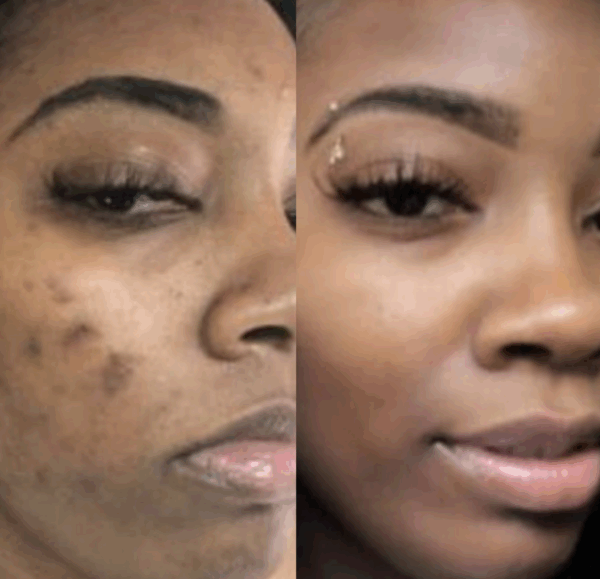
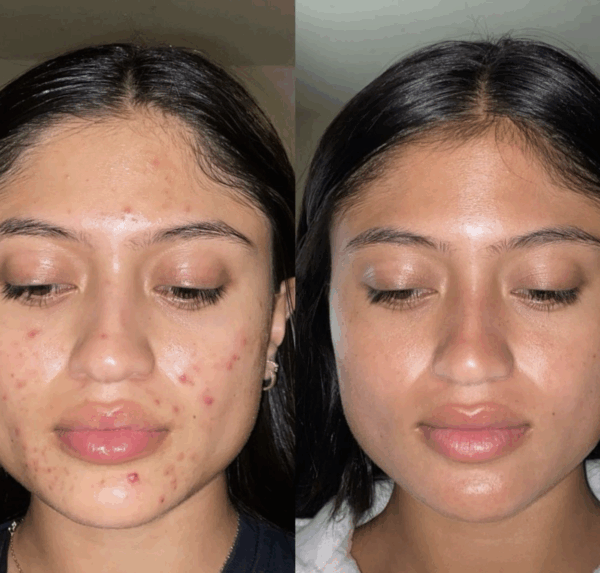
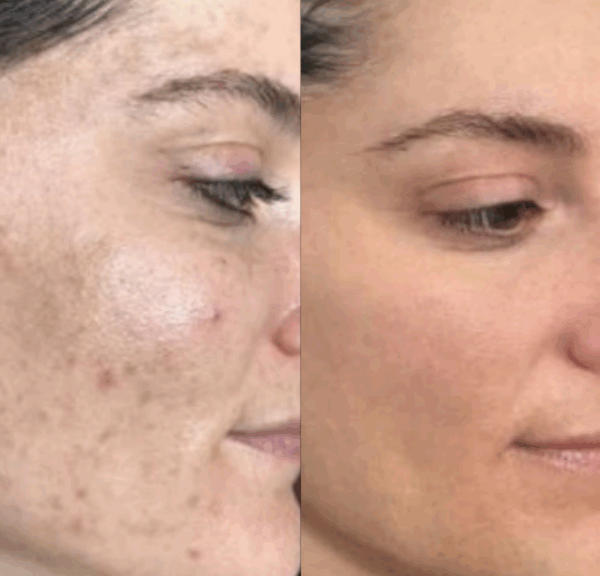
I photograph in standard light before treatment and at the end of the course.
Sun damage and pigmentation, The Perfect Peel
One peel after four weeks of preparation. Photographed at 8 weeks.
Congestion and dullness, BioRePeel
Four peels three weeks apart. Photographed 2 weeks after the last.
Post-acne marks in darker skin, Lightening Lift
Three peels with a retinoid. Photographed at 3 months.
AFTER THE PEEL
Recovery, downtime and aftercare
Superficial peels. Pinkness and warmth for a few hours; tightness and light flaking for one to three days with the stronger superficial peels, none with BioRePeel. Make-up the next day. No retinoids, acids or exfoliation for three days either side. SPF daily.
Medium peel. Day 1 to 2: the skin darkens and tightens. Day 3 to 7: it peels in sheets, which must not be picked. Day 7 to 10: pink new skin. No make-up until peeling has finished; no sun for two weeks; SPF for three months. Antiviral cover if you have a cold sore history.
What to report. Blistering, spreading redness, crusting or any darkening that persists beyond two weeks. All rare with the right peel on the right skin; all have my direct number.
Peels are not done on skin with active infection, cold sores, eczema or a sunburn, within six months of isotretinoin, or in pregnancy or breastfeeding for medium peels and retinoid-containing peels.
IS THIS FOR ME?
Is a chemical peel right for you?
Almost every skin can be peeled. The question is which peel, and what preparation it needs.
A good candidate
Dull, congested, rough or unevenly pigmented skin. Mild to moderate acne or post-acne marks. Sun damage and fine lines. Any skin type for superficial peels; skin types I to IV for a medium peel, or darker with preparation and caution. Willing to wear SPF and use a retinoid, which double the result.
Better with preparation or a different peel
Skin types IV to VI: four weeks of retinoid and inhibitor first, and a superficial peel before any medium one. Rosacea-prone skin: the enzyme peel only, once calm. Melasma: preparation, a medium peel, and strict sun protection, or it returns.
Not suitable now
Active infection, cold sores, eczema or sunburn on the face. Isotretinoin in the past six months. Pregnant or breastfeeding for medium peels and retinoid peels. A history of keloid scarring for medium peels. A tan, for a medium peel.
PRICING
What chemical peels cost
Every price includes the consultation, the peel, aftercare products for the first days and written aftercare. The £50 consultation fee is redeemed against treatment. Courses are priced below single sessions.
| Treatment | What it does | Price |
|---|---|---|
|
BioRePeel CL3, single or course of 3 |
The no-downtime peel |
£100 or £250 |
|
ZO Stimulator peel, single or course of 3 |
Texture and dullness |
£120 or £300 |
|
Obagi Blue Radiance, single or course of 3 |
Brightening and congestion |
£250 or £500 |
|
IMAGE Signature Lift, single or course of 3 |
Sensitive skin |
£95 or £250 |
|
IMAGE Lightening Lift Forte, single or course of 3 |
Pigmentation |
£115 or £300 |
|
IMAGE Wrinkle Lift Forte, single or course of 3 |
Fine lines and texture |
£115 or £300 |
|
The Perfect Peel, single or course of 3 |
Medium-depth; pigmentation and melasma |
£400 or £850 |
|
Preparation skincare |
Retinoid and pigment inhibitor for 2 to 4 weeks |
Product cost |
Prices are from the clinic price list.
WHY US
Why choose Hampstead Aesthetics for a peel
Peels are the treatment where I see the most avoidable harm: a medium peel on unprepared darker skin, a glycolic peel on active rosacea, a salicylic peel on someone who was on isotretinoin last month. I am a GMC-registered doctor (4418489), a Member of the Royal College of Surgeons of Edinburgh and a GP with a master’s degree in aesthetic medicine, and a substantial proportion of my patients have skin types IV to VI, so the assessment of who can safely have which peel, and the preparation that makes it safe, is the centre of the service rather than an afterthought.
Every consultation and every peel is carried out or supervised by me. The clinic is on West End Lane in West Hampstead, NW6, two minutes from West Hampstead station, and sees patients from Swiss Cottage, St John’s Wood, Belsize Park, Primrose Hill and across North London.
HOME CARE
What makes a peel work, before and after
Before: two to four weeks of a retinoid at night and, for pigmentation or darker skin, a pigment inhibitor such as azelaic acid, tranexamic acid or kojic acid, through the prescription retinoid programme or ZO Skin Health; a mineral SPF 30 to 50 every morning. Stop the retinoid and any acids three days before the peel. After: a gentle cleanser, a bland moisturiser and SPF only until the skin has settled, then the retinoid again from day three for a superficial peel and day ten for a medium one. Do not pick peeling skin; it is protecting what is forming beneath. Sun protection for three months after a medium peel is not optional. A maintenance peel every six to eight weeks keeps the result, and a retinoid does more between peels than the peels do themselves.
PATIENT REVIEWS
What patients say
Google 4.8 ★★★★★
TRUSTED BRANDS
Clinically validated products we use
BioRePeel (CMed Aesthetics), Obagi Blue Radiance (Obagi Medical), ZO Stimulator (ZO Skin Health), IMAGE Skincare peels and The Perfect Peel are all CE-marked professional products sourced through their authorised UK distributors. Prescription skincare for preparation is dispensed through a registered UK pharmacy.


WHO IS YOUR PRACTITIONER
Medical Governance & Practitioner Verification

Dr Chike Emeagi - GMC Registration No. 4418489
At Hampstead Aesthetics, every chemical peel is assessed and carried out or supervised by Dr Chike Emeagi, a fully registered medical doctor and GP whose qualifications and licence to practise are publicly verifiable.
MRCGP - Member of the Royal College of General Practitioners
MRCS - Member of the Royal College of Surgeons of Edinburgh
MSc Aesthetic Medicine - Postgraduate master's degree in aesthetic clinical practice
GMC Licensed - Full licence to practise, verifiable on the public medical register
You are encouraged to verify Dr Chike’s registration directly on the https://www.gmc-uk.org/
DOCTOR LED TREATMENT
Why Doctor Led Matters
A medium-depth peel is a controlled chemical burn of the upper dermis, and its complications, scarring, persistent pigmentation, infection and reactivation of cold sores, follow from the wrong peel on the wrong skin or the wrong aftercare. The preparation of darker skin with prescription retinoids and inhibitors, which is what makes a peel safe in skin types IV to VI, requires a prescriber.
At Hampstead Aesthetics I assess the skin type and the concern, prescribe the preparation, choose the peel, carry out or supervise every treatment, and manage the recovery of every medium peel personally.
YOUR SAFETY
Emergency Safety Protocols
- Anaphylaxis kit on site — full adrenaline protocol for allergic reaction.
- ACE-certified practitioner — I hold emergency complication management certification.
- 999 escalation protocol — written procedures for emergency hospital transfer.
Every product and device is CE-marked and sourced from authorised UK distributors. The clinic holds full professional indemnity insurance covering all treatments.
CONSENT
Consent, Privacy & Your Rights
Before treatment you have a full written consultation covering medical history, contraindications, realistic outcomes and the specific risks of each treatment in your plan. Treatment only proceeds with informed, documented consent. If you have a concern, raise it with me directly; if it is not resolved, you can escalate to the General Medical Council.
Your consultation, treatment and review are all conducted by the same doctor. There are no hand-offs.
Reviewed September 2026. Dr Chike Emeagi, GMC No. 4418489. Regulatory position correct at date of review; licensing of non-surgical cosmetic procedures in England is subject to change.
FAQ's
Frequently Asked Questions
What is the best chemical peel?
The one matched to your skin type and concern. For glow without downtime, BioRePeel or ZO Stimulator. For congestion and mild acne, Obagi Blue Radiance. For pigmentation in darker skin, a prepared course of IMAGE Lightening Lift. For melasma and sun damage in lighter skin, The Perfect Peel. There is no best peel, and a clinic with one peel recommends it to everyone.
Are chemical peels safe for darker skin?
Yes, with the right choice and preparation. Superficial peels with salicylic, lactic or mandelic acid are safe across all skin types. Medium peels in skin types IV to VI carry a real risk of post-inflammatory pigmentation, which two to four weeks of preparation with a retinoid and a pigment inhibitor, a test patch, and strict aftercare reduce substantially. I treat many patients with darker skin and the preparation is not optional.
How many chemical peels do I need?
Superficial peels work as a course of three to six, two to four weeks apart, with a maintenance peel every six to eight weeks. A medium peel is usually a single treatment, repeated at six to twelve months if needed. The course is set at consultation and the home routine between peels matters as much as the number.
Is there downtime after a chemical peel?
For BioRePeel, none. For the other superficial peels, pinkness for a few hours and light flaking for one to three days, with make-up the next day. For The Perfect Peel, darkening and tightening for two days, then peeling in sheets for four to five days, then pink new skin, with no make-up for a week and no sun for two.
Does a chemical peel hurt?
Superficial peels tingle or sting for a few minutes, cooled by a fan, and then settle. A medium peel stings more intensely for several minutes as each layer is applied, and I use a topical anaesthetic and cooling. Nobody has found it more than they could manage, and the discomfort is over before you leave.
Can a chemical peel remove acne scars?
Peels improve the colour and surface texture of acne scarring and clear the marks left by acne. They do not remove pitted or rolling scars on their own, which need RF microneedling, microneedling, subcision or CO2 laser; a peel supports those treatments and finishes the surface. My acne scarring page explains how the treatments combine.
Can I have a peel if I have acne?
Yes, and peels are one of the main treatments for mild to moderate acne: salicylic peels clear the pores, reduce oil and calm inflammation across a course, often alongside prescription treatment. Nodular or cystic acne needs prescription treatment first. Peels are not done within six months of isotretinoin.
Is a chemical peel better than microneedling or laser?
They do different things. Peels renew the surface and treat pigment, congestion and texture. Microneedling and RF microneedling remodel the dermis for scars and lines. IPL and laser treat discrete sun spots and vessels or resurface deeply. For most pigmentation and dullness, a peel is the most effective and best-value first step; for scars and laxity, it is the support rather than the treatment.
Which peel is best for melasma?
A prepared medium peel, The Perfect Peel, in skin types I to IV, after four weeks of a retinoid and inhibitors, produces the largest change in one treatment. In darker skin, a course of superficial peels with the same preparation is safer. In every case, melasma is controlled rather than cured, returns with sun and hormones, and depends on daily SPF more than on any peel. IPL and laser are avoided for melasma.
Can I have a peel while pregnant or breastfeeding?
Superficial peels with lactic or mandelic acid and enzyme peels are considered safe. Salicylic peels are usually avoided in pregnancy at peel strength, and retinoid-containing peels and medium peels wait until after breastfeeding. Melasma that appears in pregnancy is best managed with SPF and azelaic acid until then.
How should I prepare for a chemical peel?
For a superficial peel, stop retinoids, acids and exfoliation three days before, and arrive without make-up. For a medium peel or any peel on darker skin, use the retinoid and inhibitor routine I prescribe for two to four weeks, stop it three days before, avoid sun and self-tan for two weeks, and take antiviral cover if you have a cold sore history. Preparation is where most of the safety lies.
How much do chemical peels cost in London?
At Hampstead Aesthetics BioRePeel is £100 or £250 for three, ZO Stimulator £120 or £300 for three, IMAGE peels £95 to £115 or £250 to £300 for three, Obagi Blue Radiance £250 or £500 for three, and The Perfect Peel £400 or £850 for three. The £50 consultation fee is redeemed against treatment.
Where in London do you offer chemical peels?
At Hampstead Aesthetics on West End Lane, West Hampstead, NW6, two minutes from West Hampstead Overground, Thameslink and Jubilee line stations. Patients come from Hampstead, Swiss Cottage, St John’s Wood, Belsize Park, Kilburn, Primrose Hill and across North London.
Arrange your peel consultation
If your skin is dull, congested, unevenly pigmented or sun-damaged, a 30-minute consultation identifies which peel your skin type can safely take, what preparation it needs, and what a course will achieve. I will quote in writing. Patients come from West Hampstead, NW6 and across North London. Related: Hyperpigmentation, Acne, Acne scarring, Blackheads and enlarged pores, Aged skin.
VISIT US
Our London Clinic
Nearest Tube: West Hampstead (Jubilee Line) · 2 min walk
Overground: West Hampstead Overground · 3 min walk
Parking: Pay & Display on West End Lane
Proudly serving clients from:
West Hampstead · Hampstead · Primrose Hill · St John’s Wood · Belsize Park · Camden · Swiss Cottage · Finchley Road · Maida Vale · Queen’s Park · Highgate · Kentish Town
- Hampstead Aesthetics West Hampstead, London NW6
- Call us 020 3196 7222
- WhatsApp 07869 730 159
- Email: info@hampsteadaesthetics.com
- Opening hours: Mon–Fri 9am–7pm, Sat 10am–5pm, Sunday closed
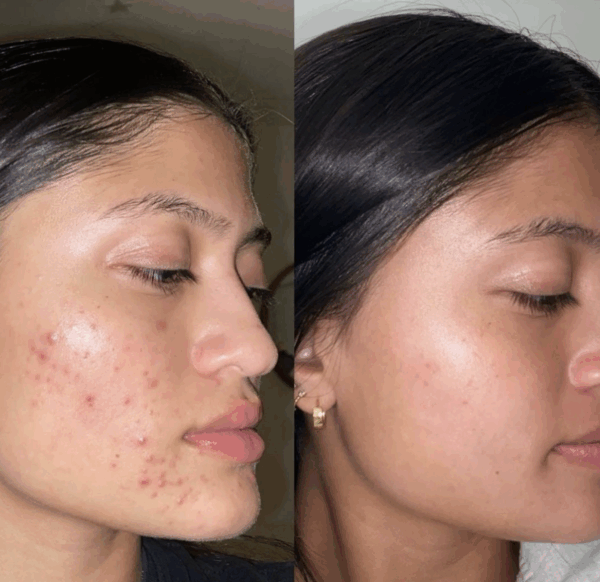
Before and After Chemical Peel
Our clinic prioritises patient safety, natural-looking results, and ethical care, making it a trusted choice for individuals seeking subtle, refined enhancements in a professional setting.
Reviewed by Dr Chiké Emeagi, MBBS, MRCGP, MRCS, GMC No. 4418489.
Last reviewed September 2026. This page is for information only and does not replace a medical consultation. Results vary between individuals and are not guaranteed. All treatments carry potential risks, which are discussed before any procedure. Prescription-only medicines are not advertised on this page. Prices are taken from the clinic price list at the date of review. Hampstead Aesthetics, 269 West End Lane, West Hampstead, London NW6 1QS.
Book Your Consultation