NAD+ Therapy in London
NAD+ is a real molecule with a real role in every cell, and an infusion of it is a wellness treatment whose evidence is still being gathered. I offer it on those terms, slowly, safely and without the claims that surround it.


Nicotinamide adenine dinucleotide, NAD+, is a coenzyme present in every living cell, essential to the reactions that convert food into energy and to the enzymes that repair DNA and regulate cellular ageing. Its levels in tissue fall with age, and that observation has driven interest in restoring it. NAD+ therapy delivers the molecule by slow intravenous infusion over about two hours, given after a health assessment and under medical supervision, as a single session or a short course. It is a wellness treatment: the laboratory science is substantial, the human trial evidence for infusions is early and small, and it is not a treatment for any medical condition. I offer it for adults interested in cellular health and general vitality, with a plain account of what is known and what is not, and I do not offer it as an answer to a symptom that needs a diagnosis.
⭐⭐⭐⭐⭐ 4.8 / 5
202 Google reviews
GMC
Registered Doctor
MRCS
Royal College of Surgeons
Slow infusion
Around 2 hours
ABOUT NAD+
What NAD+ is, and what the evidence shows
NAD+ is the molecule that carries electrons in the reactions that release energy from glucose and fat; without it, mitochondria stop. It is also the substrate for two families of enzymes that matter to ageing: the sirtuins, which regulate metabolism, inflammation and the stress response, and the PARPs, which repair damaged DNA. The body makes NAD+ from niacin, from nicotinamide, and from tryptophan, and it recycles it constantly. Tissue levels decline with age, by perhaps half between young adulthood and old age in some tissues, as the enzymes that consume NAD+ become more active and the pathways that make it slow down.
The laboratory and animal work is substantial: restoring NAD+ in aged mice improves mitochondrial function, muscle performance and several markers of ageing. The human evidence is earlier. Oral precursors, nicotinamide riboside and nicotinamide mononucleotide, reliably raise blood NAD+ in trials and have shown modest effects on some metabolic and physical measures in small studies, with no serious safety concerns at the doses used. Intravenous NAD+ has been studied in fewer and smaller trials; it raises blood levels directly, patients in some series report improved energy, sleep and clarity, and it has a history of use in addiction medicine, but there is no large controlled trial showing that infusions change health outcomes in healthy adults. That is the honest position, and it is the position from which I offer it.
What NAD+ therapy does not do: it does not treat or cure any disease, it does not reverse ageing, it is not a treatment for chronic fatigue, depression, long Covid or neurological conditions, and it does not replace investigation of tiredness. Where a patient’s reason for wanting NAD+ is a symptom, I look for the cause as a GP first. IV vitamin therapy is a separate treatment with its own page; iron infusion is a medical treatment for confirmed deficiency.
WHY PEOPLE COME
Four reasons patients ask for NAD+
I ask the reason at the assessment, because it decides whether an infusion is appropriate or whether something else comes first.
Interest in cellular health and healthy ageing
An informed adult who has read the science and wants to try it. The appropriate candidate.
A demanding period and wanting more energy
Reasonable, once blood tests have excluded the common causes of tiredness.
Recovery after illness, travel or a heavy stretch
Often combined with a hydration or vitamin drip, spaced a week apart.
A symptom: persistent fatigue, low mood, brain fog
Assessed as a GP first. NAD+ is not a treatment for these, and I will say so.
THE TREATMENT
What happens at the assessment and the infusion
The health assessment takes 15 to 20 minutes. I ask about your health, medications, allergies, kidney and liver function, heart conditions, pregnancy, and the reason you want NAD+. I check blood pressure and pulse. Where the reason is a symptom, I recommend blood tests, iron, B12, folate, vitamin D, thyroid, full blood count and glucose, before any infusion, because those results change the plan more often than patients expect. If NAD+ is appropriate I prescribe the dose, usually 250 to 500 mg for a first infusion.
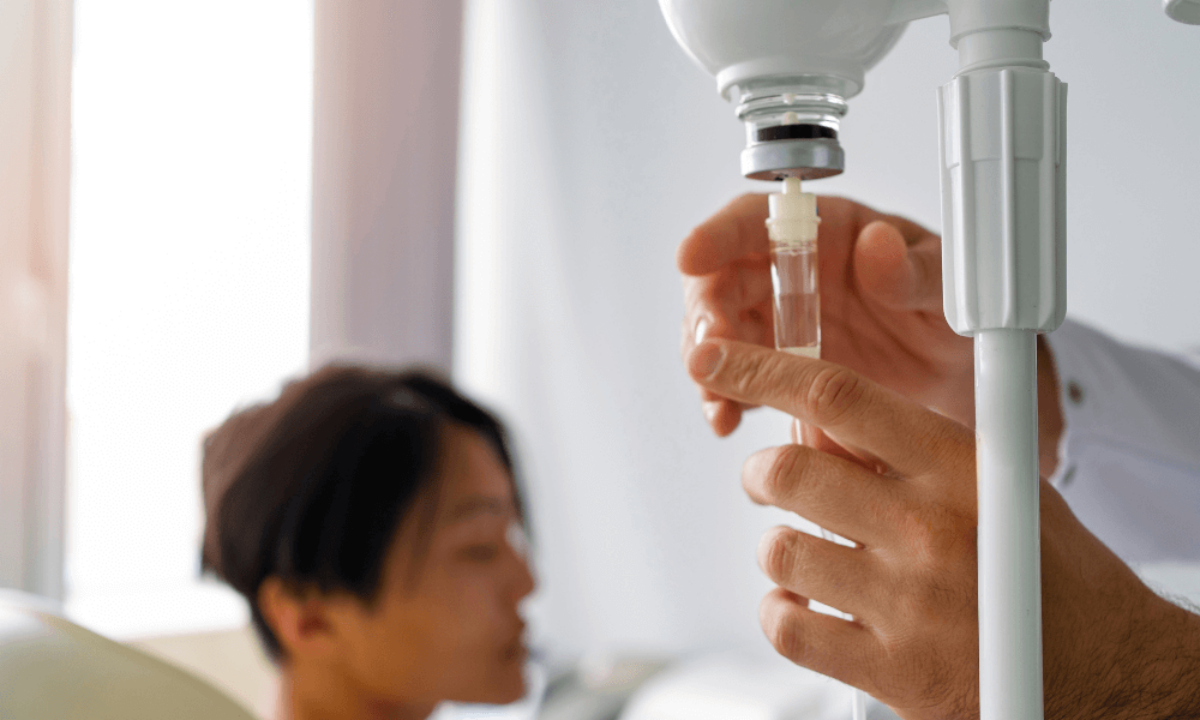
The infusion takes around two hours, and the speed is the whole art of it. NAD+ given quickly causes chest tightness, flushing, nausea, cramping and a feeling of pressure in the head; given slowly it causes none of these or only mild versions that settle when the rate is reduced. A fine cannula is placed, the bag runs on a pump at a low rate that I adjust to your comfort, and you sit in a reclining chair and read, work or rest. You are monitored throughout and can drive home afterwards.
Some patients have a single infusion; some have a short course of three to four a week apart, then one every few months. I review after the first, ask what you noticed, and only recommend more if there is something to continue. I do not sell NAD+ courses in advance.
“I offer NAD+ as a supervised wellness infusion with honest framing. It is a coenzyme central to cellular energy, the human evidence is still developing, and I assess suitability first and give it slowly. I will not tell you what an infusion can do beyond what the evidence supports.”
Dr Chiké Emeagi, MRCGP, GMC 4418489
NAD+ IN CONTEXT
NAD+ against the alternatives
Each row is an option with what the evidence supports. The realistic-result column is what I say in the room.
| Option | What it is | What the evidence shows | When you notice it | How often | Realistic result |
|---|---|---|---|---|---|
|
NAD+ infusion |
The coenzyme itself, intravenously |
Raises blood NAD+ directly; small studies and patient reports of energy, sleep and clarity; no large controlled trials |
Days |
Single or 3 to 4 weekly, then occasional |
A wellness treatment; effects vary and are not guaranteed |
|
Oral NAD+ precursors (nicotinamide riboside, NMN) |
Supplements the body converts to NAD+ |
Reliably raise blood NAD+; modest effects in small trials; good safety record |
Weeks |
Daily |
The better-evidenced route for most people, at a fraction of the cost |
|
Niacin (vitamin B3) |
The original precursor |
Raises NAD+; flushing at higher doses |
Weeks |
Daily |
Cheap and effective at raising levels; the flush limits it |
|
Fluid, B vitamins, vitamin C, magnesium |
Rehydration reliable; vitamin effects only if depleted |
Same day |
As needed |
Better for dehydration and depletion than NAD+ |
|
|
Blood tests and treatment of a cause |
Iron, B12, vitamin D, thyroid, glucose |
Treats the common causes of tiredness |
Weeks |
Once |
The right answer for most fatigue; more effective than any infusion |
|
Sleep, exercise and diet |
The basics |
The largest and best-evidenced effects on energy and ageing there are |
Weeks |
Daily |
More than any infusion; I say so at every assessment |
|
Caloric restriction and fasting |
Metabolic approaches that raise NAD+ naturally |
Raise NAD+ and sirtuin activity in animal and some human studies |
Weeks |
Ongoing |
Free; not for everyone; discussed at consultation |
|
NAD+ injection (subcutaneous) |
Small doses under the skin |
Less evidence than infusion; convenient |
Days |
Weekly |
Available on request; smaller doses than a drip |
I keep to what is published. Claims that NAD+ infusions reverse ageing, treat chronic fatigue, cure addiction or repair neurological conditions go beyond the evidence and I do not make them.
INFUSIONS AND COURSES
How NAD+ is given and spaced
A single infusion first. A course only if there is a reason to continue.
| Plan | For whom | Spacing | Typical cost |
|---|---|---|---|
|
Single NAD+ infusion |
A first experience; most patients |
One session; review after |
£350 |
|
NAD+ x3, then occasional |
Patients who noticed a benefit and want to continue |
Weekly for 3, then every 2 to 3 months |
£1,050 |
|
NAD+ with a hydration or vitamin drip |
Recovery after illness or travel |
1 week apart |
£550 to £600 |
|
Blood tests, then NAD+ if appropriate |
Any patient whose reason is a symptom |
Tests first; infusion only if nothing needs treating |
Consultation £50 plus laboratory fees |
|
Oral precursor instead |
Patients who want the evidence-based route at lower cost |
Daily |
Product cost; advised at consultation |
Costs are from the clinic price list. Blood tests are charged at laboratory cost.
WHAT TO EXPECT
What an infusion feels like, and what patients report
During the infusion, at the correct rate, most patients feel little: mild warmth, occasional light-headedness or nausea that settles when the rate is slowed, and sometimes a sense of mental clarity towards the end. In the days after, some patients report better energy, clearer thinking and improved sleep; others notice nothing. I record what each patient reports and I do not embellish it.
The honest expectations: an experience that varies between people, an effect that is not guaranteed, no change to any medical condition, and a cost that oral precursors undercut for a better-evidenced result. What an informed patient can expect is a safe, slow, supervised infusion of a molecule they have chosen to try, with a doctor who will tell them at the review whether there is any reason to have another.
I record blood pressure, pulse, dose and rate at every infusion and review the reason for continuing at each visit.
AFTER THE INFUSION
Recovery, side effects and aftercare
During the infusion. Flushing, chest or abdominal tightness, nausea, cramping and a feeling of pressure in the head are all rate-related and settle when the drip is slowed. This is why the infusion takes two hours and why it is given on a pump with a doctor present.
Afterwards. A small bruise at the cannula site. Some patients feel tired the evening after and better the next day. You can drive and work.
What to report. Any breathing difficulty, rash or chest pain in the hours after, which are rare and need assessment. You have my direct number.
NAD+ is not given in pregnancy or breastfeeding, in significant kidney, liver or heart disease, or in patients with a history of certain arrhythmias, which the assessment covers.
IS THIS FOR ME?
Is NAD+ therapy right for you?
NAD+ suits an informed adult who understands the state of the evidence. The assessment confirms it is safe.
A good candidate
A healthy adult interested in cellular health who has read about NAD+ and wants a supervised infusion. Someone recovering from a demanding period with normal blood tests. Someone who understands that effects vary and are not guaranteed.
Better with a different first step
Persistent fatigue, brain fog, low mood, poor sleep: blood tests and a GP assessment first, because iron, thyroid, B12, vitamin D, sleep disorders and depression are common, treatable, and not treated by NAD+. Anyone for whom cost matters: oral precursors have better evidence per pound.
Not suitable
Pregnant or breastfeeding. Significant kidney, liver or heart disease. Certain arrhythmias. Anyone seeking treatment for a diagnosed condition, addiction or a neurological disease, because NAD+ is not a treatment for them and I will not present it as one.
PRICING
What NAD+ therapy costs
Every price includes the health assessment, the cannula and consumables, the prescribed dose, the pump and monitoring for the full infusion. The £50 consultation fee is redeemed against treatment. Blood tests are charged at laboratory cost.
| Treatment | What it does | Price |
|---|---|---|
|
NAD+ infusion |
Around 2 hours, dose prescribed at assessment |
£350 |
|
NAD+ course of 3 |
Weekly |
£1,050 |
|
IV vitamin or hydration drip |
See the IV therapy page |
From £200 |
|
Blood test panel |
Iron, B12, folate, vitamin D, thyroid, full blood count, glucose |
Laboratory cost, quoted at consultation |
|
Health assessment |
Before a first infusion |
£50, redeemed against treatment |
Prices are from the clinic price list.
WHY US
Why choose Hampstead Aesthetics for NAD+
NAD+ in London is sold with claims that range from the optimistic to the untrue, often by people who cannot assess the heart and kidneys of the person they are infusing and who run the drip fast because the chair is needed. I am a Member of the Royal College of General Practitioners and a GMC-registered doctor (4418489); the assessment is medical, the dose is prescribed, the infusion is slow and monitored, and the description of what it does is limited to what has been published. When the reason for wanting NAD+ is a symptom, I investigate the symptom.
Every assessment and every prescription is mine, and every infusion is supervised by me. The clinic is on West End Lane in West Hampstead, NW6, two minutes from West Hampstead station, and sees patients from Swiss Cottage, St John’s Wood, Belsize Park, Primrose Hill and across North London.
THE BASICS
What raises NAD+ without a drip
Exercise, particularly resistance and interval training, increases NAD+ synthesis and sirtuin activity, and is the best-evidenced intervention for cellular ageing there is. Sleep, seven to eight hours, because NAD+ metabolism follows the circadian clock. A diet with adequate protein and B3-rich foods: fish, poultry, peanuts, mushrooms, wholegrains. Time-restricted eating or occasional fasting, which raises NAD+ in animal and some human studies, if it suits you. Limiting alcohol, which consumes NAD+ in its metabolism. A nicotinamide riboside or NMN supplement, if you want to raise blood levels daily; I discuss doses and brands at consultation. None of this is expensive and all of it does more than any single infusion.
PATIENT REVIEWS
What patients say
Google 4.8 ★★★★★
TRUSTED BRANDS
Clinically validated products we use
NAD+ for infusion is sourced from a licensed UK pharmaceutical supplier and prescribed individually by Dr Chiké after a health assessment. It is given by infusion pump at a controlled rate.


WHO IS YOUR PRACTITIONER
Medical Governance & Practitioner Verification

Dr Chike Emeagi - GMC Registration No. 4418489
At Hampstead Aesthetics, every NAD+ infusion is prescribed and supervised by Dr Chike Emeagi, a fully registered medical doctor and GP whose qualifications and licence to practise are publicly verifiable.
MRCGP - Member of the Royal College of General Practitioners
MRCS - Member of the Royal College of Surgeons of Edinburgh
MSc Aesthetic Medicine - Postgraduate master's degree in aesthetic clinical practice
GMC Licensed - Full licence to practise, verifiable on the public medical register
You are encouraged to verify Dr Chike’s registration directly on the https://www.gmc-uk.org/
DOCTOR LED TREATMENT
Why Doctor Led Matters
NAD+ given too fast causes chest tightness, nausea and a fall in blood pressure, and an intravenous infusion in someone with an undiagnosed heart or kidney condition carries risks that a health assessment exists to find. The molecule is prescribed, the prescription is a medical decision, and the claims made for it should be a doctor’s claims, limited to the evidence.
At Hampstead Aesthetics I carry out the assessment, prescribe the dose, run every infusion on a pump under supervision, and arrange blood tests when the reason for the infusion is a symptom that deserves a diagnosis.
YOUR SAFETY
Emergency Safety Protocols
- Anaphylaxis kit on site — full adrenaline protocol for allergic reaction.
- ACE-certified practitioner — I hold emergency complication management certification.
- 999 escalation protocol — written procedures for emergency hospital transfer.
Every product and device is CE-marked and sourced from authorised UK distributors. The clinic holds full professional indemnity insurance covering all treatments.
CONSENT
Consent, Privacy & Your Rights
Before treatment you have a full written consultation covering medical history, contraindications, realistic outcomes and the specific risks of each treatment in your plan. Treatment only proceeds with informed, documented consent. If you have a concern, raise it with me directly; if it is not resolved, you can escalate to the General Medical Council.
Your consultation, treatment and review are all conducted by the same doctor. There are no hand-offs.
Reviewed September 2026. Dr Chike Emeagi, GMC No. 4418489. Regulatory position correct at date of review; licensing of non-surgical cosmetic procedures in England is subject to change.
FAQ's
Frequently Asked Questions
What is NAD+ therapy?
A slow intravenous infusion of nicotinamide adenine dinucleotide, a coenzyme every cell uses to produce energy and repair DNA. Tissue levels fall with age, and the infusion restores blood levels directly. It is offered as a wellness treatment for adults interested in cellular health, after a health assessment, and it is not a treatment for any medical condition.
Does NAD+ therapy work?
It reliably raises blood NAD+ levels, and some patients report better energy, sleep and mental clarity for days to weeks afterwards. Whether it changes health outcomes in healthy adults has not been shown in large controlled trials, and I say so. The laboratory science is strong, the animal evidence is promising, and the human infusion evidence is early. That is the honest answer.
What does an NAD+ infusion feel like?
At the right rate, very little: mild warmth, occasionally light-headedness or nausea that settle when the drip is slowed, and sometimes a sense of clarity towards the end. At the wrong rate, chest tightness, flushing, cramping and pressure in the head, which is why it takes two hours on a pump with a doctor present, and why speed is the difference between a good infusion and a bad one.
How long does an NAD+ infusion take?
Around two hours, plus a 15 to 20 minute health assessment before a first infusion. It cannot safely be given faster. Bring work, a book or headphones.
How many NAD+ sessions do I need?
One, to begin with. I review after the first and ask what you noticed. Patients who notice a benefit sometimes have a course of three to four weekly, then one every two to three months. I do not sell courses in advance, because I do not know in advance whether you will benefit.
Is NAD+ better as an infusion, an injection or a supplement?
The infusion raises blood levels most directly. Subcutaneous injections deliver smaller doses conveniently. Oral precursors, nicotinamide riboside and NMN, raise blood NAD+ reliably and have the best trial evidence and safety record of the three, at a fraction of the cost. For most people who want to raise NAD+ over the long term, the supplement is the rational choice, and I say so at the assessment.
Is NAD+ therapy safe?
In a clinic, after a health assessment, on a pump at a slow rate with a doctor present, yes: the side effects are rate-related and settle when the drip is slowed, and serious reactions are rare. It is not given in pregnancy, breastfeeding, significant kidney, liver or heart disease, or certain arrhythmias.
Can NAD+ treat chronic fatigue, long Covid, depression or addiction?
No. There is early research in some of these areas, particularly addiction medicine, but there is no evidence that would justify offering NAD+ as a treatment for any of them, and I do not. If you have a symptom, the right first step is a GP assessment and blood tests, which I provide, and treatment of what they find.
Does NAD+ reverse ageing?
No. It restores a molecule that declines with age, and in aged mice that produces measurable improvements in some markers. In humans there is no evidence that infusions extend life or reverse ageing, and any clinic claiming that is claiming more than exists. Exercise, sleep and not smoking have far larger evidence for healthy ageing than NAD+.
Should I have blood tests before NAD+?
If your reason is a symptom, tiredness, brain fog, low mood, poor sleep, yes, because iron, B12, vitamin D, thyroid and glucose abnormalities are common, treatable, and not treated by NAD+. If you are well and simply interested, a normal health assessment is enough.
How much does NAD+ therapy cost in London?
At Hampstead Aesthetics a single NAD+ infusion is £350 and a course of three £1,050, including the assessment, the pump and two hours of supervised infusion. The £50 consultation fee is redeemed against treatment. Blood tests are charged at laboratory cost.
Where in London do you offer NAD+ therapy?
At Hampstead Aesthetics on West End Lane, West Hampstead, NW6, two minutes from West Hampstead Overground, Thameslink and Jubilee line stations. Infusions are given in the clinic only.
Arrange your NAD+ assessment
If you are interested in NAD+ and want it given properly, a 20-minute health assessment confirms it is safe, sets the dose, and gives you an honest account of what to expect; if your reason is a symptom, the same appointment arranges the blood tests that should come first. Patients come from West Hampstead, NW6 and across North London. Related: IV therapy, Iron infusion.
VISIT US
Our London Clinic
Nearest Tube: West Hampstead (Jubilee Line) · 2 min walk
Overground: West Hampstead Overground · 3 min walk
Parking: Pay & Display on West End Lane
Proudly serving clients from:
West Hampstead · Hampstead · Primrose Hill · St John’s Wood · Belsize Park · Camden · Swiss Cottage · Finchley Road · Maida Vale · Queen’s Park · Highgate · Kentish Town
- Hampstead Aesthetics West Hampstead, London NW6
- Call us 020 3196 7222
- WhatsApp 07869 730 159
- Email: info@hampsteadaesthetics.com
- Opening hours: Mon–Fri 9am–7pm, Sat 10am–5pm, Sunday closed
Reviewed by Dr Chiké Emeagi, MBBS, MRCGP, MRCS, GMC No. 4418489.
Last reviewed September 2026. This page is for information only and does not replace a medical consultation. NAD+ therapy is a wellness treatment and is not intended to diagnose, treat, cure or prevent any disease. Results vary between individuals and are not guaranteed. All treatments carry potential risks, which are discussed before any procedure. Prices are taken from the clinic price list at the date of review. Hampstead Aesthetics, 269 West End Lane, West Hampstead, London NW6 1QS.
Book Your Consultation