

Tear Trough Filler in London: Under-Eye Hollows and Dark Circles
The tear trough is the hardest place on the face to put filler well and the easiest place to put it badly. The skin is the thinnest on the body, the vessels sit just beneath it, and the wrong product or the wrong plane shows as a blue tint or a puffy ridge for a year. Done with restraint, by cannula, in the right patient, it takes years of tiredness off a face in twenty minutes.


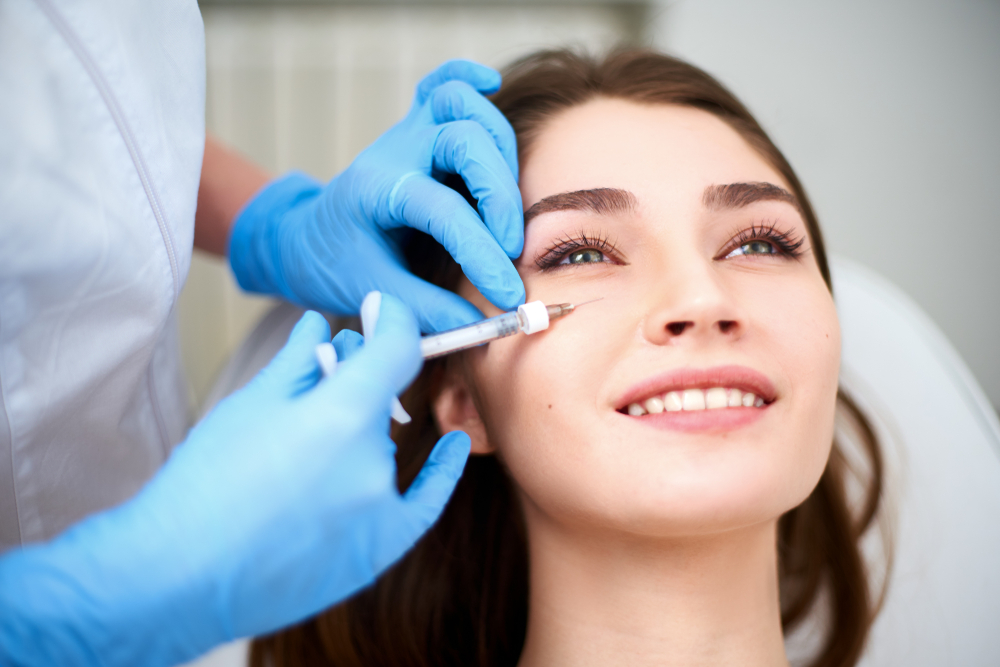
Tear trough filler is a soft hyaluronic acid filler placed deep under the eye, on the bone beneath the muscle, to fill the groove that runs from the inner corner of the eye towards the cheek and casts the shadow people read as dark circles or tiredness. It suits a hollow with good skin over it; it does not suit puffiness, bags, loose skin or pigment, which need other treatments. I place it with a blunt cannula from a single entry point on the cheek, which keeps the tip away from the vessels and reduces bruising, using 0.5 to 1 ml in total for most patients. The result is immediate, settles over two weeks and lasts twelve to eighteen months, often longer because the area barely moves. Around a third of the patients who ask me for tear trough filler are better treated with cheek filler, polynucleotides or nothing, and I say so. At Hampstead Aesthetics tear trough rejuvenation is £400, including the consultation and a two-week review.
⭐⭐⭐⭐⭐ 4.8 / 5
202 Google reviews
GMC
Registered Doctor
MRCS
Royal College of Surgeons
12 to 18 months
Typical duration
ABOUT THE TEAR TROUGH
What the tear trough is, and why the under-eye looks tired
The tear trough is the groove between the lower eyelid and the cheek, running from the inner corner of the eye outward and downward. It is there in everyone, held by a ligament that tethers the skin to the bone, but in youth the fat of the cheek sits high enough to hide it. With age, and in some faces from the twenties, the cheek fat descends and thins, the bone beneath the eye recedes, and the groove deepens into a hollow that catches the light as a shadow. The skin over it, the thinnest on the body at around half a millimetre, lets the purple of the muscle and vessels show through. Add pigment in some skin types and the fat pad above bulging forward as a bag, and you have the four separate reasons an under-eye looks dark, only one of which filler treats.
Filler treats the hollow. Placed on the bone, beneath the orbicularis muscle, a soft hyaluronic acid gel lifts the floor of the groove so that it no longer casts a shadow, and the eye looks rested. It does nothing for pigment, which needs skincare, peels or laser; it makes a bag look worse, because it fills beside a bulge rather than removing it; and it cannot tighten crepey, loose skin, which needs polynucleotides, laser or surgery. The product matters as much as the placement: a filler that is too firm or too hydrophilic swells, and a filler placed too shallow shows as a blue-grey tint through the thin skin, the Tyndall effect, that lasts as long as the filler does.
Where it sits in a plan: tear trough filler is for a true hollow with reasonable skin, in a face whose cheeks still support it. Where the cheek has flattened, cheek filler first lifts the floor of the trough from below and often makes the tear trough unnecessary. Where the skin is thin, dark and crepey, polynucleotides or Rejuran thicken and brighten it. The under-eye page explains how I decide between them, and my blog on polynucleotides versus tear trough filler goes into the choice in detail.
THE UNDER-EYE OPTIONS
Four under-eye treatments, and which problem each solves
Dark circles are a description, not a diagnosis. The consultation identifies whether yours is a hollow, thin skin, pigment or a bag.
Tear trough filler
A soft HA filler deep in the groove for a hollow with good skin. Immediate; 12 to 18 months. £400.
Cheek filler first
Where the cheek has flattened, restoring it lifts the trough from below. Often makes tear trough filler smaller or unnecessary. £350 per ml.
Polynucleotides or Rejuran
Three sessions of DNA-based repair for thin, crepey, dark under-eye skin. Thickens and brightens; no volume. £300 a session, £800 for three.
Skincare and pigment treatment
A retinoid, vitamin C and SPF for brown pigment; peels or laser where it is stubborn. No filler helps pigment.
Dissolving previous filler
Puffy, blue or migrated under-eye filler from elsewhere dissolved with hyaluronidase, then reassessed. £300.
Surgical referral
True fat-pad bags and loose lower-lid skin need a blepharoplasty. I refer rather than fill.
THE TREATMENT
What happens at the consultation and the treatment
The consultation takes 20 minutes and is the most important part. I look at the under-eye in overhead and front light, because a hollow casts a shadow from above and pigment does not. I press gently on the fat pad to see whether there is a bag, pinch the skin to judge its thickness and elasticity, look at the cheek beneath the trough, and ask about allergies, sinus problems and morning puffiness, all of which predict swelling. I photograph you. Then I tell you which of the four problems you have. If it is a hollow with good skin and a supported cheek, filler is right; if not, I recommend what is, and about a third of patients leave with a different plan.
The treatment takes 20 to 30 minutes. Numbing cream is applied for 15 minutes. I make a single tiny entry point on the cheek with a needle and pass a blunt cannula through it, sliding along the bone beneath the muscle to the trough. The cannula cannot pierce a vessel the way a needle can, which is why bruising is rare and why the risk of the most serious complication, filler entering the vessels that supply the eye, is far lower. I place small amounts of a soft filler designed for the area, usually 0.3 to 0.5 ml a side, massage it flat and check the result with you sitting up. A little more can be added at the review; nothing can be taken away without dissolving.
You leave with written aftercare and my direct number. The review is at two weeks, when the swelling has gone and the true result can be judged. Tear trough filler combines with cheek filler in the same session for a flattened mid-face, with polynucleotides four weeks later to improve the skin over it, and with anti-wrinkle injections to the crow’s feet. Where a bag or loose skin is the main problem, I refer to an oculoplastic surgeon.
“The whole skill in the tear trough is restraint. The right patient, the right filler, deep on the bone, by cannula, and less than you think. I have never regretted placing too little under an eye, and I have dissolved a great deal of other people’s too much.”
Dr Chiké Emeagi, MRCS, GMC 4418489
TEAR TROUGH FILLER VS THE ALTERNATIVES
How tear trough filler compares with other under-eye treatments
Each row is a treatment patients ask me to compare. The realistic-result column is what I say in the room.
| Treatment | What it treats | Who it suits | Onset and duration | Downtime | Realistic result |
|---|---|---|---|---|---|
|
Tear trough filler |
The hollow and the shadow it casts |
A true groove with reasonable skin and a supported cheek |
Immediate; 12 to 18 months or longer |
Swelling 2 to 5 days; occasional bruise |
A rested eye; no change to pigment or skin quality |
|
The flattened cheek beneath the trough |
A hollow that continues into the cheek; most faces over 40 |
Immediate; 12 to 18 months |
Swelling 2 to 3 days |
Lifts the trough from below; often the better first step |
|
|
Thin, crepey, dark under-eye skin |
Fine lines, darkness from thin skin, early bags |
4 to 8 weeks; 6 to 12 months |
Small bumps 24 to 48 hours |
Thicker, brighter skin; no filling of a hollow |
|
|
PRP under the eye |
Skin quality, mildly |
Someone wanting a natural approach |
6 to 8 weeks; 6 months |
Bruising |
A modest improvement in skin; weaker than polynucleotides |
|
Pigment treatment: retinoid, vitamin C, peels, laser |
Brown pigment |
Darkness that stays when you look up and stretch the skin |
Months |
Variable |
The only thing that helps true pigment |
|
Puffy, blue or migrated old filler |
Anyone unhappy with previous tear trough filler |
24 to 48 hours |
Swelling for a day |
The under-eye back to baseline; refill later if appropriate |
|
|
Lower blepharoplasty |
Fat-pad bags and loose skin |
True bags; skin excess |
Permanent |
Surgical; 2 weeks |
The only answer to a bag; filler makes a bag worse |
My blog on polynucleotides versus tear trough filler is the detailed version of this table.
TIMELINE
Tear trough filler day by day
The under-eye swells more than most areas and settles more slowly. This is the usual course.
| Time | What is happening | What you see | What to do |
|---|---|---|---|
|
Day of treatment |
Filler placed; anaesthetic and cannula trauma |
Immediate improvement, slightly over-corrected by swelling; pinpoint mark on the cheek |
Cold compress; sleep propped up; no rubbing |
|
Days 1 to 3 |
Peak swelling, worst on waking |
Puffy on waking, settling by midday; occasional bruise |
No exercise, alcohol, salt or heat; no eye make-up over the entry point |
|
Days 4 to 7 |
Swelling receding |
Shape close to final; bruising yellowing |
Normal life |
|
Day 14 |
Filler integrated |
The true result |
Review; small addition if needed |
|
Months 12 to 18 |
Slow metabolism of the filler |
Gradual return of the shadow |
Top-up when you notice it, often less than the first time |
|
Any time |
Warning signs |
Persistent puffiness, a blue tint, lumps or a change in vision |
Call me the same day; the first three dissolve, the last is an emergency |
Morning puffiness that persists beyond a fortnight usually means the filler is attracting water and is dissolved rather than waited out.
RESULTS
Results and what to expect
A good tear trough result is one nobody can see: the hollow is gone, the shadow with it, and the eye looks rested rather than treated. Most patients describe being told they look well or asked whether they have slept. The change is immediate, a little exaggerated by swelling for a few days, and settled at two weeks. Because the area moves so little and the filler is placed on bone, results last longer than in the lips or cheeks, often eighteen months and sometimes years, and top-ups need less product each time.
The honest expectations. Filler treats the hollow only, so a patient whose darkness is pigment or whose problem is a bag will not be helped, and I will say so at consultation. Over-filling, the wrong product or shallow placement produce the complications this treatment is known for: puffiness that is worse in the morning, a blue-grey tint through the skin, and a visible ridge on smiling. All three are avoidable with restraint and all three are reversible with hyaluronidase, which is the reason I use only hyaluronic acid here. A small proportion of patients, particularly those with allergies or thin skin, hold water around the filler and are better with polynucleotides instead.
I photograph in overhead and front light before treatment and at the two-week review.


Tear trough, single session
1 ml by cannula. Photographed immediately after treatment; the hollow and shadow filled.
Tear trough and cheek, single session
0.5 ml tear trough over 1 ml cheek. Photographed at 2 weeks.
Tear trough, male patient
0.8 ml by cannula. Photographed immediately after treatment.
AFTER TREATMENT
Recovery, downtime and aftercare
The first 24 hours. A cold compress for ten minutes at a time. Sleep on your back with an extra pillow. No rubbing, no eye make-up over the entry point, no contact lenses until the next day if the entry point is close to the eye.
The first 48 hours. No exercise, alcohol, saunas, salty food or long-haul flights, all of which increase swelling under the eye more than anywhere else.
The first two weeks. No facials, massage or other treatments to the area. Antihistamines help patients with hay fever or allergies, who swell more.
Bruising. Uncommon with a cannula; if it happens, it sits on the cheek at the entry point and covers with make-up from the next day.
You leave with written aftercare, the date of your two-week review and my direct contact details, and I would rather hear about puffiness at day three than at day thirty.
IS THIS FOR ME?
Is tear trough filler right for you?
The best patient is easy to describe: a hollow under the eye, skin that is not too thin, no bag, and a cheek that still supports the area. Everyone else gets a different recommendation.
A good candidate
A visible groove from the inner corner of the eye that casts a shadow. Darkness that disappears when you tilt your head back or shine light from the front. Reasonably thick, elastic skin. A cheek that has not flattened, or cheek filler done first. Usually from the mid-twenties to the fifties. Any skin type.
Better with something first or alongside
A flattened cheek: cheek filler first, then reassess. Thin, crepey, dark skin: polynucleotides first. Brown pigment: skincare and pigment treatment. Old filler that is puffy or blue: dissolve, wait four weeks, reassess. Allergies and morning puffiness: polynucleotides rather than filler.
Not suitable now
Fat-pad bags, which filler makes worse. Loose lower-lid skin, which needs surgery. Active infection, cold sores or conjunctivitis. Pregnancy or breastfeeding. A history of serious filler reaction. Recent eye surgery, discussed at consultation. Anyone wanting the hollow filled completely, which is how puffiness happens.
PRICING
What tear trough filler costs in London
A flat £400 for tear trough rejuvenation, which covers both eyes with up to 1 ml of a premium filler designed for the area, the consultation, written aftercare and a two-week review. The consultation is free if I recommend something else or nothing. Where a second syringe is needed, usually in a deep hollow or alongside the cheek, it is quoted before treatment.
| Treatment | What it does | Price |
|---|---|---|
|
Tear trough rejuvenation, both eyes |
Up to 1 ml by cannula; review included |
£400 |
|
Cheek filler alongside, 1 ml per side |
To lift the trough from below |
£350 per ml |
|
Polynucleotides for the eyes, course of 3 |
Thin, dark, crepey skin; instead of or after filler |
£800 |
|
Dissolving previous under-eye filler |
Hyaluronidase; reassessed at 4 weeks |
£300 |
Prices are from the clinic price list. Across London, tear trough filler by a doctor is typically £450 to £750; the range reflects product and experience, and this is the one filler where the cheapest option is the most expensive in the long run.
WHY US
Why choose Hampstead Aesthetics for tear trough filler
The tear trough is where filler complications cluster: puffiness, blue tint, lumps, and, rarely, blindness from filler entering the vessels around the eye. Every one of them comes from the wrong patient, the wrong product, the wrong plane or the wrong instrument. I am a GMC-registered doctor (4418489), a Member of the Royal College of Surgeons of Edinburgh and a GP with a master’s degree in aesthetic medicine, and I have been treating this area for over a decade with a cannula, on bone, with a product made for it, in patients I have selected. I decline around a third of requests, and a good proportion of my tear trough work is dissolving filler placed elsewhere.
Hyaluronidase is on the shelf for every appointment, I hold the ACE complication certification and the clinic has a written emergency pathway to ophthalmology. The clinic is on West End Lane in West Hampstead, NW6, two minutes from West Hampstead Jubilee line, Overground and Thameslink stations. Patients come from Hampstead, Swiss Cottage, St John’s Wood, Belsize Park, Kilburn, Primrose Hill and across North and West London.
AT HOME
What makes the under-eye look better between treatments
Sleep, salt and alcohol show under the eye before anywhere else, and no filler changes that. Sunscreen and sunglasses, because ultraviolet thins the skin and deepens pigment. A retinoid at night through the prescription retinoid programme, started low and built up, thickens the skin over years. Vitamin C in the morning for pigment. An eye cream with caffeine reduces morning puffiness modestly; one with hyaluronic acid plumps the surface. Treat hay fever, because chronic allergy darkens and swells the under-eye. A course of polynucleotides every year or so keeps the skin over the filler healthy, which is what makes the result look natural rather than filled.
PATIENT REVIEWS
What patients say
Google 4.8 ★★★★★
TRUSTED BRANDS
Clinically validated products we use
For the tear trough I use soft, low-hydrophilic hyaluronic acid fillers designed for the area, principally Stylage S and Teosyal Redensity II, with Restylane and Juvéderm Volbella where the tissue suits them. All are CE-marked and sourced through their authorised UK distributors with batch traceability. I do not use permanent fillers, firm cheek fillers or unbranded products under the eye.


WHO IS YOUR PRACTITIONER
Medical Governance & Practitioner Verification

Dr Chike Emeagi - GMC Registration No. 4418489
At Hampstead Aesthetics, every tear trough treatment is carried out by Dr Chike Emeagi, a fully registered medical doctor and GP whose qualifications and licence to practise are publicly verifiable.
MRCGP - Member of the Royal College of General Practitioners
MRCS - Member of the Royal College of Surgeons of Edinburgh
MSc Aesthetic Medicine - Postgraduate master's degree in aesthetic clinical practice
GMC Licensed - Full licence to practise, verifiable on the public medical register
You are encouraged to verify Dr Chike’s registration directly on the https://www.gmc-uk.org/
DOCTOR LED TREATMENT
Why Doctor Led Matters
The vessels around the eye connect directly to the artery that supplies the retina. Filler injected into one of them can travel backward and block it, and the result is permanent loss of vision in that eye. It is very rare, it has happened in the UK, and it happens with needles, with force, and with practitioners who do not know where the vessels run. The tear trough is also where the commoner complications, puffiness and the blue Tyndall tint, are most visible and last longest. The UK has no legal requirement for the person injecting under your eye to hold any qualification.
At Hampstead Aesthetics I assess the eye, select the patient, choose a product designed for the area, place it by cannula on the bone, and keep hyaluronidase, an anaphylaxis kit and a written ophthalmology pathway on hand. Every patient has my direct number.
YOUR SAFETY
Emergency Safety Protocols
- Anaphylaxis kit on site — full adrenaline protocol for allergic reaction.
- Hyaluronidase on site — reversal agent for hyaluronic acid filler and part of the vascular occlusion protocol.
- ACE-certified practitioner — I hold emergency complication management certification.
- 999 escalation protocol — written procedures for emergency hospital transfer.
Every product and device is CE-marked and sourced from authorised UK distributors. The clinic holds full professional indemnity insurance covering all treatments.
CONSENT
Consent, Privacy & Your Rights
Before treatment you have a full written consultation covering medical history, contraindications, realistic outcomes and the specific risks of each treatment in your plan. Treatment only proceeds with informed, documented consent. If you have a concern, raise it with me directly; if it is not resolved, you can escalate to the General Medical Council.
Your consultation, treatment and review are all conducted by the same doctor. There are no hand-offs.
Reviewed September 2026. Dr Chike Emeagi, GMC No. 4418489. Regulatory position correct at date of review; licensing of non-surgical cosmetic procedures in England is subject to change.
FAQ's
Frequently Asked Questions
How much does tear trough filler cost in London?
£400 at Hampstead Aesthetics, covering both eyes with up to 1 ml of a premium under-eye filler, the consultation and a two-week review. Across London the range is typically £450 to £750 with a doctor. If I think filler is the wrong treatment for you, the consultation costs nothing.
What is the difference between tear trough filler and under-eye filler?
The tear trough is the specific groove from the inner corner of the eye toward the cheek; under-eye filler is the broader term, which can include the groove, the flat area beneath it and the junction with the cheek. In practice they describe the same treatment, and the amount and placement are decided by where the hollow is on your face.
How long does tear trough filler last?
Twelve to eighteen months for most patients, and often longer, because the area barely moves and the filler sits on bone. Top-ups usually need less product than the first treatment. Some patients still have a good result at two years.
Will tear trough filler make me look puffy?
Not if the patient is well chosen, the filler is a soft product made for the area, and the amount is conservative. Puffiness comes from over-filling, from firm or water-attracting fillers, and from treating people who hold fluid under the eye, such as those with allergies. If it does happen it is dissolved with hyaluronidase within a day or two.
Is tear trough filler safe?
In experienced medical hands, yes, and I have treated the area for over a decade. The serious risk is filler entering a vessel connected to the eye, which is very rare and is minimised by using a blunt cannula, injecting slowly and staying on the bone. The commoner problems, puffiness, a blue tint and lumps, are reversible with hyaluronidase, which I keep on site.
Cannula or needle for the tear trough?
Cannula. A blunt cannula through a single entry point on the cheek slides along the bone beneath the muscle and cannot pierce a vessel the way a needle can, so it bruises less and is safer. A needle has a place for a tiny final adjustment in some faces, but the main placement here is always by cannula.
What is the Tyndall effect?
A blue-grey tint through the skin where hyaluronic acid filler has been placed too shallow, caused by the way the gel scatters light under thin skin. It is most visible under the eye because the skin is thinnest there, it lasts as long as the filler, and it is treated by dissolving. It is avoided by placing the filler deep, on the bone.
Tear trough filler or polynucleotides?
Filler for a hollow with decent skin; polynucleotides for thin, crepey, dark skin without much of a hollow. Many patients over forty benefit from both: polynucleotides first to thicken the skin, filler afterwards to fill what remains. My blog on polynucleotides versus tear trough filler goes through the decision.
Can tear trough filler fix dark circles?
Only the kind caused by a shadow. Tilt your head back in a mirror: if the darkness disappears, it is a hollow and filler helps. If it stays, it is pigment in the skin or the colour of the muscle and vessels showing through thin skin, and the answers are skincare, pigment treatment or polynucleotides.
Can it be combined with cheek filler?
Yes, and it often should be. A flattened cheek is what deepens the tear trough in most faces over forty, and cheek filler placed first lifts the floor of the groove so that less, or no, tear trough filler is needed. I decide the order at consultation.
How much filler do I need under my eyes?
Usually 0.3 to 0.5 ml a side, and rarely more than 1 ml in total. The tear trough is one area where less is reliably better; a hollow that is filled completely looks puffy on smiling. I would rather add a little at the two-week review than dissolve.
What if I am unhappy with the result?
Hyaluronic acid filler dissolves within 24 to 48 hours of an injection of hyaluronidase, so no result is permanent. If the under-eye is puffy, blue or uneven, we dissolve, wait four weeks and decide together whether to treat again. My dissolving page explains the process.
Does tear trough filler hurt?
Very little. Numbing cream is applied for fifteen minutes, the entry point is a single needle prick on the cheek, and the cannula produces pressure rather than pain. Most patients describe it as strange rather than sore. The area is tender for a day or two.
How soon before an event should I have it?
Two weeks at least, ideally three, because the under-eye swells for several days and the true result is at a fortnight. A first treatment is best done a month before anything photographed so the review has happened.
Where in London do you offer tear trough filler?
At Hampstead Aesthetics on West End Lane, West Hampstead, NW6, two minutes from West Hampstead Jubilee line, Overground and Thameslink stations. Patients come from Hampstead, Swiss Cottage, St John’s Wood, Belsize Park, Kilburn, Primrose Hill and across North and West London.
Arrange your tear trough consultation
If your under-eyes look hollow, dark or tired whatever you do, a consultation with me works out whether it is a hollow, thin skin, pigment or a bag, tells you honestly whether filler is the answer, and quotes in writing. Patients come from West Hampstead, NW6 and across London. Related: Under-eye bags, Cheek fillers, Polynucleotides, Dissolving dermal fillers.
VISIT US
Our London Clinic
Nearest Tube: West Hampstead (Jubilee Line) · 2 min walk
Overground: West Hampstead Overground · 3 min walk
Parking: Pay & Display on West End Lane
Proudly serving clients from:
West Hampstead · Hampstead · Primrose Hill · St John’s Wood · Belsize Park · Camden · Swiss Cottage · Finchley Road · Maida Vale · Queen’s Park · Highgate · Kentish Town
- Hampstead Aesthetics West Hampstead, London NW6
- Call us 020 3196 7222
- WhatsApp 07869 730 159
- Email: info@hampsteadaesthetics.com
- Opening hours: Mon–Fri 9am–7pm, Sat 10am–5pm, Sunday closed
Reviewed by Dr Chiké Emeagi, MBBS, MRCGP, MRCS, GMC No. 4418489.
Last reviewed September 2026. This page is for information only and does not replace a medical consultation. Results vary between individuals and are not guaranteed. All treatments carry potential risks, which are discussed before any procedure. Before-and-after photographs show individual patients and do not guarantee identical outcomes. Prices are taken from the clinic price list at the date of review. Hampstead Aesthetics, 269 West End Lane, West Hampstead, London NW6 1QS.